Author: Jake Fernandez

  • The Other Side of Oswald: 3 Reactions to His Arrest

    The Other Side of Oswald: 3 Reactions to His Arrest

    Before Lee Harvey Oswald became known for all the wrong reasons, he was like every other person. Unlike how he’s portrayed in mainstream media, Oswald was someone his children looked up to, an individual who contributed to society, and, most importantly, someone who admired and supported President John F. Kennedy.

    In our latest article, we discuss the testimonies following Oswald’s arrest; their surprise is yet another indication that Oswald was no more than a scapegoat.

    1. Francis Martello

    Warren Commission staff member Wesley Liebeler asked Francis Martello if he was surprised upon learning that Oswald had been arrested for shooting President John F. Kennedy.

    The records show that then-Lieutenant Martello had interviewed Oswald following a previous arrest in August 1963.

    Martello responded to the question in the affirmative, expressing his surprise and emphasizing that Oswald did not come across as a violent individual during their interview. He described Oswald as passive and non-violent in his demeanor and appearance.

    Martello went as far as to state that he couldn’t have imagined or believed that Oswald would commit the alleged acts attributed to him.

    1. Sam Ballen

    In his Oswald testimony, Sam Ballen said he became acquainted with Lee Harvey Oswald through a mutual friend named George De Mohrenschildt. De Mohrenschildt informed Ballen that he had met an intriguing couple, the Oswalds, who had recently arrived in Dallas and Fort Worth from Russia.

    Oswald was facing financial difficulties and needed employment. At the request of De Mohrenschildt, Ballen agreed to meet with Oswald and help him find a job. Ballen and Oswald had a two-hour meeting in Ballen’s office, after which the latter left for a meeting at the Republic National Bank.

    When asked about the arrest, Ballen said he was surprised to hear it. He explained that he did not believe Oswald was the type of person capable of such an act.

    Ballen said if you were to line up 50 individuals, Lee Harvey Oswald would stand out as the least likely suspect, as he didn’t fit the profile of someone who would commit such a crime. Thus, Ballen’s surprise stemmed from his perception that Oswald did not fit the typical profile of a person capable of such actions.

    A Smiling Lee Harvey Oswald Holding His Young Daughter

    1. Buell Wesley Frazier

    Buell Wesley Frazier was a friend and coworker of Oswald’s.

    He revealed in an interview that Oswald had a strong affection for children. Frazier recounted how he often engaged in conversations about the neighborhood’s children, and how many of them regularly sought out the Paine house, where Oswald and his daughter lived, to partake in play and social interactions with him.

    His statements emphasize Oswald’s more personal and ordinary qualities in contrast to the public image of him as an assassin. They also indicate that he had everything to lose by committing such an act.

    Proving Lee Harvey Oswald can bring us closer to the real killers of President Kennedy. Help us raise our voice by looking beyond conspiracy theories to the cold, hard facts supporting a much more sinister truth.

    Reach out for more details and general inquiries.
  • History Repeats Itself (Almost): The Assassination Attempt on RFK Jr.

    History Repeats Itself (Almost): The Assassination Attempt on RFK Jr.

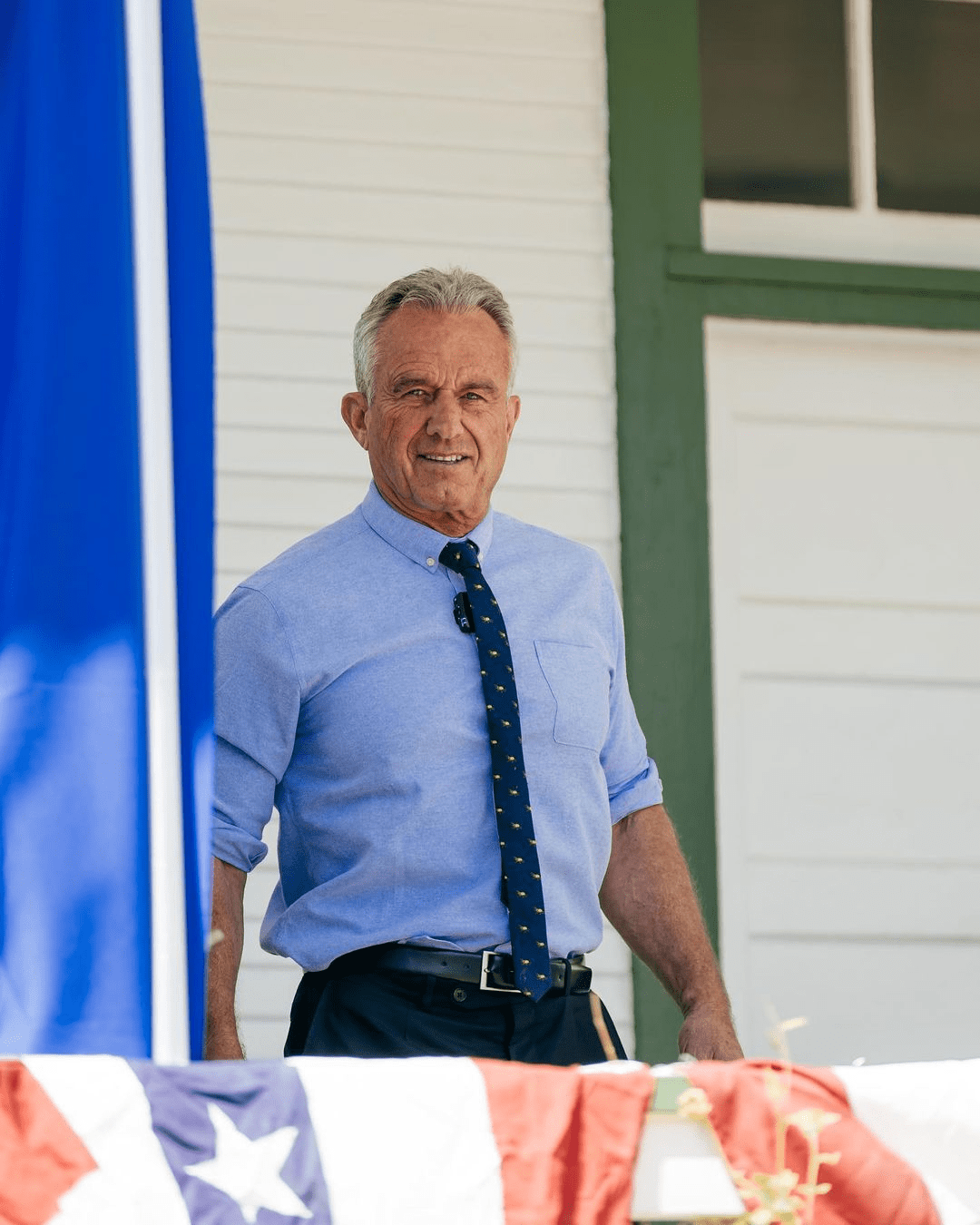
    In a bone-chilling event reminiscent of the not-so-long-ago assassination of Shinzo Abe, an assassination attempt on Democratic presidential hopeful Robert F. Kennedy Jr. unfolded outside a campaign event in a Los Angeles neighborhood. The harrowing incident prompted Kennedy and our platform to request Secret Service protection in a recent Action Alert, but it has failed to drive home the gravity of the threat to RFK Jr.’s life.

    Here are the details of the incident and the subsequent arrest.

    The Assassination Attempt on RFK Jr.

    In mid-September 2023, a man by the name of Adrian Aispuro was arrested outside the Wilshire Ebell Theatre in Los Angeles, where RFK Jr. was delivering a speech as part of National Hispanic Heritage Month celebrations.

    The 44-year-old man found himself in police custody after allegedly impersonating a US Marshal while carrying a loaded firearm and displaying US Marshal identification.

    The arrest took place following a call to the Los Angeles Police Department (LAPD). The caller reported Aispuro’s presence, describing him as armed and in possession of US Marshal identification.

    While the LAPD responded promptly, they skewed the narrative by saying Aispuro did not enter the theater, nor did he brandish his weapon or pose a direct threat to anyone inside.

    Kennedy’s Reaction to the Incident

    Kennedy expressed gratitude to Gavin de Becker for detecting and detaining the armed individual. The incident accentuates the risks faced by political figures, especially those in campaigns. RFK Jr.’s prior requests for Secret Service protection were denied by the Department of Homeland Security.

    The haunting historical context, given the assassinations of Kennedy’s father and uncle, deepens the significance of any threat to his safety.

    A Stamp Saying “Denied” Denoting the Multiple Unsuccessful Requests for Secret Service Made by RFK Jr.

    Protecting Presidential and Vice-Presidential Candidates

    The Secret Service has established guidelines for the protection of presidential and vice-presidential candidates in the lead-up to the 2024 election. These guidelines deem “major presidential and vice-presidential candidates” as eligible for protection.

    However, it is specified that such protection should be granted within one year before the general election. Protection more than a year prior is considered only under exceptional, case-by-case circumstances and in consultation with the committee, based on threat assessments and other factors.

    Does the Assassination Attempt on RFK Jr. Necessitate Secret Service Protection?

    The Kennedy campaign reiterated its concerns and requested Secret Service protection again in August, only to face another refusal. This prompted the campaign to make a third application in late September. At the time of writing this, RFK Jr. remains as protected as he was when Aispuro was arrested.

    Wondering whether the hint of an assassination attempt on RFK Jr. necessitates Secret Service protection is like wondering the same for his father, Senator Robert F. Kennedy, and uncle, President John F. Kennedy. The time to ponder is long past, and it’s high time Kennedy gets the protection he needs.

    Contribute to our efforts to put pressure on the Secret Service before Kennedy is faced with another, more serious threat.

    Contact us for queries and concerns.

  • Robert F. Kennedy Jr.’s Perspective of the RFK Assassination

    Robert F. Kennedy Jr.’s Perspective of the RFK Assassination

    The assassination of Robert F. Kennedy in 1968 was a moment that forever altered the course of American history. He was a tour de force whose assassination remains a point of contention and controversy.

    One voice that has emerged as a prominent advocate for re-examining the circumstances of RFK’s murder is none other than his son, RFK Jr. Click here for his thoughts on his father and uncle’s assassinations.

    On a recent episode of Club Random with Bill Maher, the now-presidential candidate sat down with Maher and made some compelling points regarding his father’s murder.

    The Autopsy Report

    A critical piece of evidence that RFK Jr. has pointed to is the autopsy report. He highlights the findings of Thomas Noguchi, the coroner who conducted an autopsy on his father’s body.

    Noguchi’s meticulous examination led him to conclude that the shots that killed Senator Robert F. Kennedy came from behind, contradicting the idea that Sirhan Bishara Sirhan, who was in front of him, was the only person to fire a gun that day.

    Eyewitness Accounts

    RFK Jr. has drawn attention to the 77 eyewitnesses present during the assassination. According to these accounts, Sirhan was never in a position to have fired the fatal shots.

    Their testimonies raise questions about the accuracy of the official narrative and point to the possibility of a second gunman.

    Sirhan in a prison jumpsuit

    RFK Jr.’s Revisits the RFK Assassination

    In the podcast, RFK Jr. said that there were eight bullets in Sirhan’s barrel. He fired two of them at his father, one clipping his ear and getting lodged in a door jamb and the other hitting Paul Schrade, who was standing beside him.

    He was then tackled to the ground by six men, one of whom, Rafer Johnson, tried to get the gun out of Sirhan’s hand. He failed to get Sirhan to let go of the weapon, leading the latter to fire the remaining shots but not at the Senator but away from him.

    In conclusion, Sirhan stood facing RFK, whereas the four fatal shots came from the back. If all of Sirhan’s bullets are accounted for, the idea of a second gunman becomes very real.

    Seeking the Truth

    In light of these discrepancies and unanswered questions, Robert F. Kennedy Jr. is not content with accepting the official account of his father’s assassination.

    Instead, he advocates for a thorough re-examination of the case, the evidence, and the individuals involved.

    Advocate for the Truth with Kennedys and King

    Join Kennedys and King in raising your voice for the truth behind the political assassinations of the 1960s.

    In this case, all you have to do is a) Watch the 15-minute podcast and b) Go through Thomas Noguchi’s official autopsy report to know that Sirhan did not fire the shots that mortally wounded Senator Kennedy at the Ambassador Hotel that day. Contribute to our efforts or read our articles for a better understanding of the RFK assassination.

    Reach out for comments and queries.

  • Officer Tippit and the Curious Case of the Light-Gray Jacket

    Officer Tippit and the Curious Case of the Light-Gray Jacket

    The findings of Warren Commission will have you believe that Lee Harvey Oswald killed Officer Tippit while fleeing the chaos that naturally follows the assassination of any political figure, let alone one as important as the President of the United States.

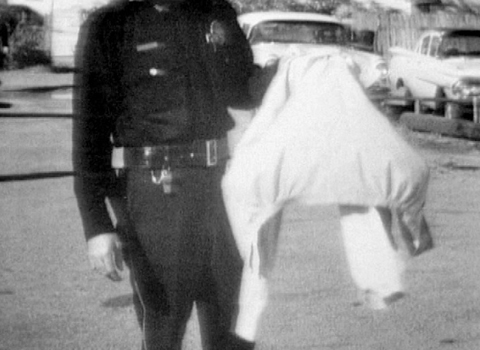
    His connection to the assassination of Officer Tippit is based on flimsy evidence, such as the Eisenhower-style light-gray jacket that was recovered in the direction the killer was said to have escaped after firing his gun at Tippit—more on that in our most recent article.

    Let’s see if the jacket belonged to Oswald or even the killer, shall we?

    Marina Oswald’s Testimony

    Marina Oswald claimed to recognize the jacket as one of two belonging to her husband. However, she stated that both of Oswald’s jackets had come from and were purchased in the Soviet Union.

    The jacket found in a parking lot two blocks from the Tippit crime scene was identified as a brand sold in clothing stores in Los Angeles and Philadelphia, a clear indication that it had not originated in Russia.

    A Weak Link in the Chain

    The Eisenhower jacket stands as the weakest link in the government’s chain of evidence against Oswald in the assassination of Officer Tippit.

    The jacket, officially labeled as Warren Commission exhibit 162, was reportedly found partially hidden underneath a 1954 Oldsmobile in a parking space behind Ballew’s Texaco service station.

    However, the circumstances surrounding its discovery remain shrouded in mystery. No one saw the killer place it there, and the identity of the person who found the jacket is unclear.

    light gray jacket

    Unreliable Witness Testimonies

    Witnesses who observed the gunman fleeing from the scene generally disagreed on whether the found jacket matched the one worn by Officer Tippit’s killer.

    Some either failed to identify the jacket, while others explicitly stated that it did not match the garment worn by the assailant. In the end, even the Warren Commission was forced to conclude that the witness accounts varied with regard to the jacket.

    The Discrepancies

    Authorities attempted to connect the jacket to Oswald by claiming that some fibers found on it matched the brown shirt Oswald had been wearing when he was arrested.

    However, witnesses consistently described the killer as wearing a white shirt, not a brown one, adding further uncertainty to the jacket’s relevance.

    Take a Closer Look at the Assassination of Officer Tippit

    The inconsistencies, lack of concrete links, and conflicting witness testimonies cast significant doubt on the jacket’s relevance to the crime and whether Lee Harvey Oswald committed it.

    Explore this section of the unsolved assassination of John F. Kennedy on our platform. Support our efforts to thwart attempts at abolishing the JFK Records Act and bring the truth to light once and for all.

    Contact us for further assistance.

  • Did Lee Harvey Oswald Buy the .38 Smith & Wesson Pistol?

    Did Lee Harvey Oswald Buy the .38 Smith & Wesson Pistol?

    The official narrative will have you believe that Lee Harvey Oswald murdered Officer J.D. Tippit while fleeing shortly after assassinating President John F. Kennedy. While the latter theory is full of holes that we have identified in the last few decades, we have only just begun to unravel the former.

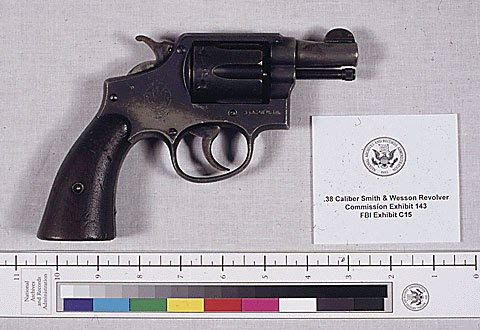
    Click here, or keep reading to know why Oswald couldn’t have owned the .38 Smith & Wesson Pistol, the alleged murder weapon used to kill Tippit.

    The Dubious Purchase

    Oswald’s purported acquisition of the pistol is said to have occurred through an advertisement placed in an April 1963 men’s adventure magazine.

    According to the narrative, Oswald sent an order form and ten dollars in cash or money order to Seaport Traders of Los Angeles, requesting the pistol be shipped via Railway Express Agency (REA) to his post office box in Dallas.

    However, several inconsistencies in this story raise questions about its validity.

    Postal Procedures and Regulations

    The US Post Office did not handle private cargo for private shipping companies like REA. Instead, the gun should have been sent to REA’s facility in downtown Dallas, and a postcard notification would be sent to the buyer’s post office box.

    The process involved specific rules and regulations, including a certificate of good character, proof of identification, and payment of the balance owed to REA.

    There is no record of a certificate of good character, no Form 5024 with proof of ID, and no testimony confirming Oswald or anyone else picking up the .38 Smith & Wesson Pistol.

    Officer Tippit

    Lack of Concrete Evidence

    Crucially, there is no concrete evidence that these rules were followed in Oswald’s case. The Warren Commission provided only a copy of a receipt, not the original, and it was not signed by either Oswald or his supposed alias, A.J. Hidell.

    There is no evidence of REA ever sending a postcard to Oswald’s P.O. Box, and no one witnessed Oswald or anyone else bringing such a postcard into REA.

    In Essence

    In essence, there are no Department of Public Safety, police, or clerk records indicating that Lee Harvey Oswald ever obtained this handgun legally. The absence of transaction witnesses and documented payments cast significant doubt on the notion that he personally ordered and received this Smith & Wesson revolver.

    The evidence does not support the claim that Oswald bought this gun, an accusation he vehemently denied before his death at the hands of Jack Ruby. Nothing is perplexing, mysterious, or unsolved about the fact that he couldn’t have owned the weapon said to have been used to kill Tippit.

    Read more about this case and the other events surrounding the JFK assassination on Kennedys and King, a platform that has worked tirelessly to identify the discrepancies surrounding the political assassinations of the 1960s.

    Get in touch for comments and feedback.

  • The Possibility of an Oswald Impersonator

    The Possibility of an Oswald Impersonator

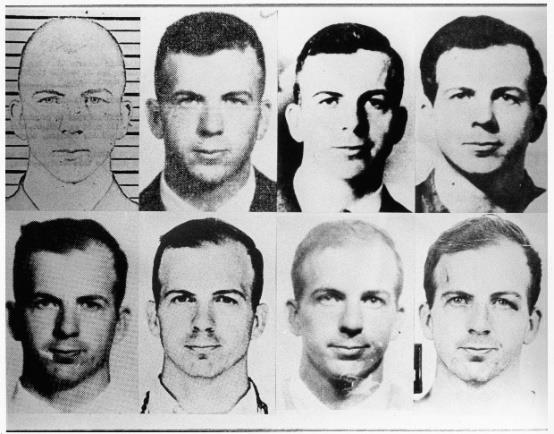
    A mysterious figure emerged in the lead-up to the John F. Kennedy assassination on November 22, 1963. He bore an uncanny resemblance to Lee Harvey Oswald, but was it really the alleged killer of a president or someone who looked like him? The accounts of this Oswald impersonator have fueled numerous theories and speculations.

    Today, we discuss some of these puzzling sightings, as listed in this article.

    The Birth Certificate Riddle: June 3, 1960

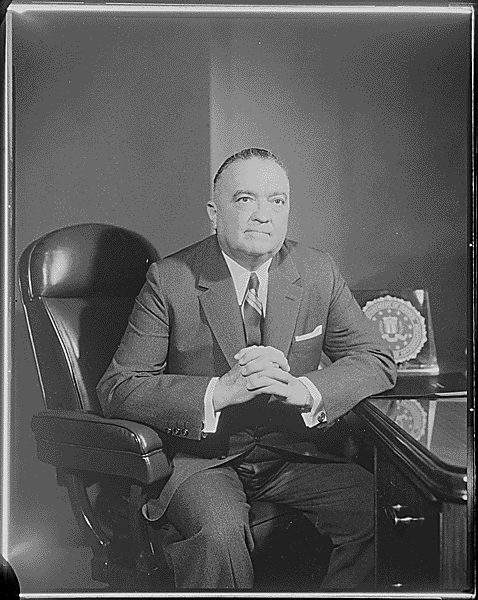
    FBI Director J. Edgar Hoover raised eyebrows when he penned a memo suggesting that someone within the States might have used Oswald’s birth certificate to impersonate him while he was in the Soviet Union. The early notion of an Oswald impersonator hinted at a deeper mystery.

    A Strange Encounter in New Orleans: January 20, 1961

    In New Orleans, an odd incident unfolded when two men visited a Ford dealership. One of them, Joseph Moore, expressed an intent to purchase ten Ford Econoline trucks for the Friends of Democratic Cuba.

    The other man, claiming to be Lee Oswald, offered to handle the payment. Here’s what’s strange about this: The real Oswald was in Minsk when this occurred.

    The unusual episode hinted at the exploitation of Oswald’s identity for covert purposes.

    The Sportdrome Gun Range Incident: November 16, 1963

    Another bizarre sighting occurred at the Sportdrome Gun Range in Oak Cliff. The Oswald doppelgänger at this sighting bragged about his Italian-made carbine and fired shots at targets, causing a scene. Such provocative behavior added to the intrigue surrounding the real Lee Harvey Oswald.

    A Disturbance at the Dobbs House Restaurant: November 20, 1963

    At the Dobbs House Restaurant, a man claiming to be Lee Harvey Oswald caused a commotion just two days before the JFK assassination.

    He berated the waitress and loudly complained about his runny eggs. This aggressive behavior contrasted sharply with the real Oswald’s demeanor. Even if he’d been acting out of character, he should’ve been working at the Texas Book Depository when the ruckus occurred.

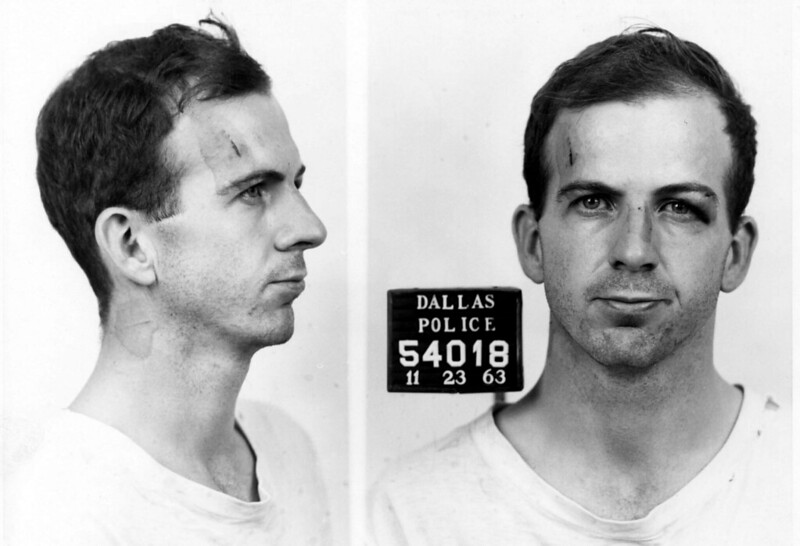
     Oswald mugshot

    Puzzling Purchases on Assassination Day: November 22, 1963

    On the morning of the JFK assassination, a young man using Oswald’s name bought two bottles of beer at a store near Dealey Plaza. He presented a Texas driver’s license with Oswald’s name and birthdate. These purchases happened after Oswald reported to work at the book depository.

    The probable Oswald impersonator later returned to purchase peanut-coconut brittle, an unusual choice for breakfast. These seemingly ordinary transactions took place just before the world-changing events of that fateful day.

    Read More About the Curious Case of Two Oswalds Online

    Check out the article mentioned above for a deeper exploration of the possibility of an Oswald impersonator. Discover the wider conspiracy surrounding the assassination of President John F. Kennedy and the other political assassinations of the 1960s on a platform that advocates for the truth even when it is not a popular opinion.

    Get in touch for comments and feedback.

  • The Assassination of Officer Tippit: Revisiting the Witnesses

    The Assassination of Officer Tippit: Revisiting the Witnesses

    The Warren Committee and House Select Committee on Assassinations findings concluded that Lee Harvey Oswald was the person behind the killing of 1963 Officer J.D. Tippit on the same day as the assassination of President John F. Kennedy. Their conclusions are mostly based on eyewitness accounts. Read our article to see why these testimonies are dubious.

    Let’s take a closer look at some of these eyewitnesses.

    Domingo Benavides

    Domingo Benavides was the closest witness to the assassination of Officer Tippit. He was driving on E. 10th Street when he heard three gunshots nearby. He didn’t witness the shooting itself but saw the shooter walking away.

    It’s worth noting that Benavides couldn’t identify the shooter because he only caught his back as he ran away. He checked on Tippit, who was deceased by that time, and retrieved two shell casings left by the fleeing gunman.

    Lastly, he noted the suspect’s squared-off haircut, which didn’t match Lee Harvey Oswald’s tapered haircut. The only thing that matched was the “Eisenhower” jacket, but that’s circumstantial at best.

    Helen Markham

    Helen Markham was a key witness in the Tippit case. She claimed to have seen the shooting, but contradictions marred her testimony. While Markham described an encounter where a man shot Officer Tippit, her version conflicted with other witnesses.

    Below are some of these contradictions:

    • She was the only one to see the killer walking east, while others saw the killer walking west along 10th Street.
    • Markham claimed the killer leaned into Tippit’s open passenger window, but only the vent window was cracked open.
    • She also stated that she spent 20 minutes alone with the dying officer, which contradicted Benavides’ testimony suggesting Tippit died quickly.

    Assistant Warren Counsel Wesley Libeler called Markham’s testimony “contradictory and worthless,” and others doubted her identification of Oswald. Top of Form

    Tippit and witnesses

    William Scoggins

    Cab driver William Scoggins witnessed the assassination of Officer Tippit from his parked vehicle at 10th & Patton. While eating his lunch, he saw Tippit’s patrol car stop, and a young pedestrian approached it. However, Scoggins’ view of the killer was blocked due to hedges.

    When gunshots rang out, he saw a young man with a gun walk past his cab, and Scoggins took cover behind it.

    At a police lineup, Scoggins identified Lee Harvey Oswald as the man he saw crossing the lawn.

    By November 23rd, most Dallas residents were aware of Oswald’s alleged involvement. During the lineup, Oswald was the only one who provided his correct name and stated he worked at the Texas School Book Depository.

    To make matters worse, Scoggins later admitted he couldn’t identify Oswald in a separate photo lineup, saying he was told he picked the wrong man.

    Discover More Contradictory Testimonies at Kennedys and King

    There are enough contradictory testimonies in this event and the one preceding it, i.e., the assassination of John F. Kennedy. Explore our website for a thorough analysis of dubious accounts and evidence that leaves enough room to believe Lee Harvey Oswald was but a scapegoat, a patsy in the JFK assassination.

    Write us to share your thoughts and feedback about our work.

    Bottom of Fo

  • Douglas Horne’s Account of the Culture at the Assassination Records Review Board

    Douglas Horne’s Account of the Culture at the Assassination Records Review Board

    The Assassination Records Review Board (ARRB) lasted four years, and Douglas Horne was a part of it for three of those years. We have discussed his time inside the ARRB in one of our most recent articles. The now-author had quite the tenure. He started as a Senior Analyst but was soon promoted to the position of Chief Analyst on the Military Records Team.

    Below is a summary of Horne’s perspective of the ARRB culture.

    The ARRB’s Limited Familiarity

    Douglas Horne described a sense of “future shock” when he started his service in Washington. Except for Jack Tunheim, the board members displayed limited familiarity with the intricate details of the assassination of John F. Kennedy case.

    Horne’s Attempts to Educate the Board

    After recognizing this knowledge gap, Horne suggested a series of briefings to educate the ARRB members about the complexities of the JFK assassination. However, Chief Counsel Jeremy Gunn dissuaded such an initiative.

    Gunn said that the board had little interest in the conflicting evidence surrounding the case. He also said that the ARRB did not subscribe to the notion that a conspiracy had been orchestrated to assassinate President John F. Kennedy.

    The ARRB vs. The Public Opinion

    In his book Inside the Assassination Records Review Board findingsAssassination Records Review Board findings, Horne estimated that up to two-thirds of the ARRB staff adhered to the conclusions of the Warren Commission. This was particularly surprising since the ARRB was established in the aftermath of the widespread public commotion spurred by Oliver Stone’s film that strongly suggested a conspiracy.

    During that period, public opinion polls indicated that over 75% of the population believed in a conspiracy. The ARRB did not reflect the public opinion.

     Kennedy and Khrushchev

    Strong Bias and Resistance to Dissent

    Within the ARRB staff and among independent researchers who questioned the findings of warren commission, a strong bias prevailed. Anyone who expressed skepticism about its verdict encountered resistance.

    The bias even extended to David Marwell, the staff director. Marwell’s appointment may have been influenced by his alignment with the prevailing views of the board.

    The ARRB’s Final Report

    To cap it all, the ARRB’s Final Report included a phrase asserting that Oliver Stone’s JFK was “largely fictional.” This particular statement has raised eyebrows among those who closely scrutinized the evidence.

    In numerous instances, a detailed examination of the film compared to the documents opened by the Review Board revealed that Stone’s portrayal often corroborated the available evidence.

    The comment in the report is either the result of a lack of objectivity or influenced by a preexisting bias. It serves as a parting shot directed at the creators of the film and those who continue to question the official narrative.

    Kennedys and King is one of those whose dissenting voices the ARRB would have shot down had it existed today. Every claim on our platform is supported by concrete evidence, something you’ll see as soon as you open our first article. Support our cause to bring the truth behind JFK assassination to light.

    Contact us to learn how you can be a part of our authors’ panel.

  • An Update on John F. Kennedy’s Medical Evidence

    An Update on John F. Kennedy’s Medical Evidence

    There are countless theories centering around the controversial medical evidence related to President John F. Kennedy’s mysterious death. Recently, two new pieces of testimony have emerged, shedding further light on the mystery surrounding Kennedy’s brain and adding to the intrigue surrounding this historic event. Check them out in our latest article.

    Alternatively, keep reading for the gist of these testimonies and their implications.

    The Mastrovito Interview

    The first testimony regarding JFK’s medical evidence comes from James M. Mastrovito, a 20-year veteran of the Secret Service who served from 1959 to 1979.

    The Relevance of James M. Mastrovito

    Mastrovito’s career included a stint on the White House detail from 1960 to 1962, and he eventually rose to become the Director of the Intelligence Division within the Secret Service. What makes Mastrovito’s account particularly intriguing is his involvement with the Kennedy file, which contained a substantial amount of material related to the president.

    The Testimony

    The most astonishing revelation from Mastrovito’s interview with the Assassination Records Review Board (ARRB) was his claim that he had received a piece of President Kennedy’s brain. He described the brain matter as being contained in a vial with an identifying label.

    Notably, the vial was from the Armed Forces Institute of Pathology (AFIP). When asked who had handed him the vial, Mastrovito stated that it was Walter Young, the first chief of the Intelligence Division, who had given it to him.

    Unfortunately, Young had passed away a year before Mastrovito’s interview. Shockingly, Mastrovito disclosed that he had disposed of the contents of the vial in a machine designed to destroy food.

     Texas Book Depository

    The Vrtacnik Interview

    Ken Vrtacnik worked at the Armed Forces Institute of Pathology (AFIP) from 1964 to 1965. He was interviewed by Dave Montague and Doug Horne, who were part of the ARRB medical inquiry.

    In his interview, Vrtacnik confirmed and supported the testimony given by Mastrovito. He disclosed that he saw President Kennedy’s brain during his tenure at AFIP. According to Vrtacnik, the brain specimen was stored securely in a locked room as part of the AFIP complex.

    Like Mastrovito, Vrtacnik was certain that it was Kennedy’s brain because it was clearly labeled as such. He also emphasized that the brain specimen was subject to strict control and security measures.

    The Plot Thickens

    The revelations by Mastrovito and Vrtacnik add a new layer of mystery and controversy to JFK’s medical evidence.

    In his documentaries JFK Revisited and JFK: Destiny Betrayed, Oliver Stone had previously raised questions about the weight and condition of Kennedy’s brain based on available evidence. Stone argued that the official weight of Kennedy’s brain, reported as 1500 grams, appeared inconsistent with the extensive damage caused by a gunshot to the head, as seen in the Zapruder film and reported by medical personnel at both Parkland and Bethesda.

    Additionally, the condition of the brain, as described by witnesses, was severely damaged, with some reporting that a third of the brain was missing. However, the photographic evidence from the autopsy contradicted these accounts, showing a relatively intact brain with minimal disruption.

    If the autopsy was conducted at Bethesda Naval Hospital and President Kennedy’s brain was handed over to Admiral George Burkley for internment, how did a part of Kennedy’s brain end up at the AFIP?

    More importantly, why are we only hearing about this now? Read our articles to follow this line of inquiry into the assassination of John F. Kennedy. You can also support our decades-old cause through the contribution methods mentioned on our website.

    Reach out for feedback and support.

  • J. Edgar Hoover’s Obsession with Martin Luther King: A Revisit

    J. Edgar Hoover’s Obsession with Martin Luther King: A Revisit

    The civil rights movement was led by remarkable individuals like Martin Luther King, Rosa Parks, Malcolm X, and more. Most of these leaders, including King, were “dispatched” because they tried to change the status quo.

    Behind the scenes, the King faced a formidable adversary in the form of J. Edgar Hoover, the controversial FBI director. Hoover’s obsession with King is a dark chapter in American history, highlighting the extent to which government agencies can misuse their authority. Click here for more on this.

    Let’s reexamine the complex relationship between J. Edgar Hoover and MLK.

    Guilt by Association

    Hoover’s obsession with King began with a disturbing strategy: Guilt by association. Despite the absence of evidence linking King to the Communist Party, Hoover sought to tarnish King’s reputation by connecting him to leftist and communist organizations. This tactic aimed to undermine King’s credibility and harm the civil rights movement.

    For example, after King was stabbed during a 1958 book signing in New York City, the FBI noted that one of his blood donors, Benjamin Davis, was a Communist Party member. The Bureau also highlighted King’s name on a petition for clemency for a man imprisoned for not wanting to testify before the House Un-American Activities Committee (HUAC). This guilt-by-association strategy aimed to smear King’s name.

    Surveillance and Intrusion

    J. Edgar Hoover, in true FBI fashion, ordered the surveillance of King’s activities. The FBI had been tapping King’s phone in Atlanta since the late 1950s, long before any concrete evidence of wrongdoing emerged. The intrusion into King’s privacy violated his civil liberties and raised concerns about government overreach.

    As if that wasn’t enough, the FBI “investigated” the Southern Christian Leadership Conference (SCLC) offices to gather information on King. This pattern of surveillance and intrusion intensified as Hoover’s fixation grew.

    MLK during a march

    Direct Conflict and Smear Campaigns

    The conflict between J. Edgar Hoover and MLK escalated when the latter wrote an article for The Nation, advocating for greater FBI involvement in combating civil rights violations in the South. King also pointed out the lack of agents of color within the FBI, suggesting that this might hinder their commitment to civil rights causes. Hoover responded by questioning why King had not been investigated by the FBI and underlined this in a memo.

    Hoover’s main charges against King were rooted in accusations that two of King’s supporters, Stanley Levison and Jack O’Dell, had communist affiliations. Despite the lack of concrete evidence, Hoover spread these rumors to politicians on Capitol Hill, creating a cloud of suspicion around King’s associates.

    Where Does the US Stand Today?

    We live in a capitalist society. If anything, the elites that remained untouchable back then have only brought more social classes into their fold.

    The purpose of revisiting this dark period in history underscores the importance of safeguarding civil liberties and ensuring transparency and accountability without exception. It reminds us of the need to protect individuals who champion social justice, even in the face of powerful opposition.

    An alleged target of that opposition, Martin Luther King, is the victim of one of the most mysterious political assassinations of the 1960s. Dissect these mysteries by checking out the MLK assassination tab.

    Get in touch for comments and feedback about our most recent article.