Author: Jake Fernandez

  • The Problem with Joe Carter’s Response to RFK Jr.’s Statement

    The Problem with Joe Carter’s Response to RFK Jr.’s Statement

    Joe Carter is a former reporter for United Press International. He was on the scene during that tragic day when President John F. Kennedy was assassinated in Dealey Plaza, Dallas, Texas.

    While he was someone who was there from the beginning to the unfortunate end, his support for the findings of Warren Commission and dismissal of Robert F. Kennedy Jr. cast his testimony regarding the JFK assassination in doubt.

    Tap here to know the main narrative regarding RFK Jr. that Joe Carter recently supported.

    Keep reading to know what the presidential nominee said about his uncle’s assassination and Carter’s problematic response.

    RFK Jr. Triggers All the Wrong Memories for Joe Carter

    On 25th July 2023, in a heavily criticized interview with Fox News, Bobby Kennedy said there had been a concealment of facts spanning six decades regarding the JFK assassination.

    He pointed out the Warren Commission’s connection to Allen Dulles, who had held the position of the CIA head and was dismissed by his uncle at the time of the latter’s assassination.

    Robert Kennedy Jr. also said he believed President Kennedy’s death was the result of a deliberate scheme and a conspiracy involving multiple individuals.

    Joe Carter’s Response to the Assertions

    A week later, Carter responded to Kennedy’s claims, saying they had triggered nightmares from that fateful day. His denouncement was reported in an extremely biased news report by The Norman Transcript, an outlet few are familiar with, for all the right reasons.

    We at Kennedys and King wholeheartedly extend our well-wishes to the former reporter and hope that he feels better in the months following Kennedy’s statement. What we can’t support is his often-unreasonable support for the main narrative.

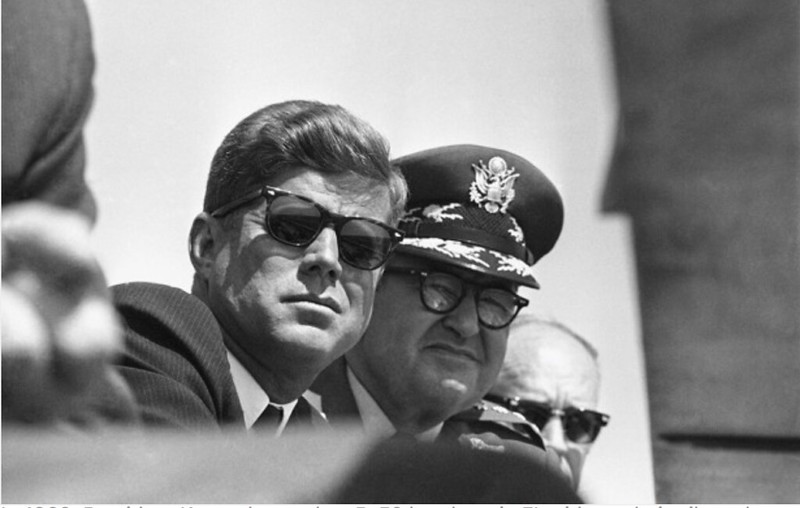
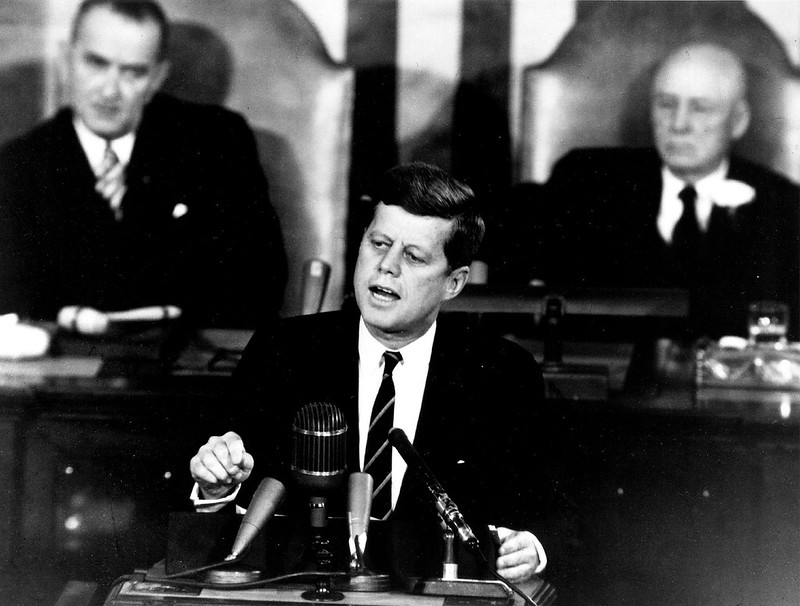
    JFK in 1962

    The Problem with Joe Carter’s JFK Assassination Narrative

    In the same report, Carter mentions that he doesn’t buy the idea that the intelligence community was somehow involved in the assassination of John F. Kennedy because, wait for it, “It always came back to Lee Harvey Oswald.”

    The former journalist said that Oswald worked a job where he was in shooting range of the President’s motorcade, and he took it. He didn’t mention the finger and palm prints that were provided as evidence of Oswald’s alleged crime, and for good reason.

    You see, there is no proof tying Oswald to the JFK assassination because the Warren Commission has itself debunked Oswald’s presence on the easternmost window from where the shots were said to have been fired.

    It acknowledged that the key box and a nearby box at the window where the shots were fired did not bear Oswald’s identifiable prints. Moreover, the prints found on one box were not conclusive evidence of when Oswald had touched it. Additionally, FBI expert Sebastian Latona found no latent prints on the paper bag during his initial examination on 23rd November 1963.

    Help Us Get to the Truth Behind the JFK Assassination

    If there is evidence tying Oswald to the JFK assassination, there is also enough reasonable doubt and contradictory evidence for the issue not to be “black and white,” as Joe Carter puts it.

    Read our articles to support our efforts to denounce the main narrative and call out attempts to hide the truth behind JFK assassination. You could also contribute to our ongoing endeavors via multimedia or by raising your voice.

    Get in touch for inquiries and comments.
  • An Introduction to the Pentagon Papers

    An Introduction to the Pentagon Papers

    Certain events are so impactful that they define the period they occur in and reverberate for years to come. Events like the disclosure of the Pentagon Papers have the power to challenge a society’s ideals, actions, and philosophies. Click here to learn more about the person responsible for bringing them into the public eye.

    Today’s blog will introduce you to the significance of the Pentagon Papers and how they flipped public opinion about the Vietnam War on its head.

    What Were the Pentagon Papers?

    The Pentagon Papers were a study regarding our country’s political and military involvement in the Vietnam War between 1945–1967.

    Commissioned by the US Department of Defense, these top-secret Papers were brought to light in March 1971 by Daniel Ellsberg, a defense analyst who risked his safety and career by making copies of the report and disseminating it to several news publications.

    These classified documents unearthed a trail of decisions, strategies, and motivations that had steered the United States’ involvement in the Vietnam War for decades.

    Did the Papers Meet Their Goals?

    The then-Secretary of Defense, Robert McNamara, commissioned the Pentagon Papers to analyze America’s role in the Saigon conflict. The report was meant to trace back the decisions and policies that led to the divisive public image of the conflict. However, it only ended up unraveling a tale of concealment and manipulation.

    The 7000-page report traced our country’s journey through the war. The internal analysis included incriminating facts about the half-truths and misinformation campaigns that administrations had spun to keep the public on their side.

    From President Truman first dipping his toes in Saigon to President Johnson declaring a complete escalation, the Papers confirmed what the critics were saying: A systemic effort was at play to manipulate public opinion to continue military operations that lost their moral foundation the second they resulted in civilian casualties.

    Nixon and South Vietnamese President


    The Enduring Legacy of the Pentagon Papers

    Defense analyst Daniel Ellsberg’s courage and perseverance led to the publication of the Papers in the New York Times, The Washington Post, and many other newspapers.

    The reveal marked a watershed moment in American history, shaking the public’s faith in their leaders and the institutions they governed. The anti-war sentiments were no more divisive but an eye-opener for those who favored military involvement in Vietnam.

    It’s been over half a century since these Papers were published. Still, its echoes remain in the form of the accountability and transparency we continue to demand from those who we choose to represent our principles and politics.

    Learn More About the Biggest Coverups in US History

    By leaving no stone unturned regarding the Vietnam War, the Pentagon Papers shed light on other scandals, forcing people to second-guess official accounts whether or not they were the truth.

    The assassination of John F. Kennedy is one such scandal whose official account and alleged killer Lee Harvey Oswald has been debunked several times. Follow our platform as we stick to the facts in our struggle to bring the truth behind the JFK assassination to light.

    Support our platform so that we may continue fighting the good fight.

  • What Aaron Mate Got Wrong About the JFK Assassination?

    What Aaron Mate Got Wrong About the JFK Assassination?

    The Useful Idiots podcast lived up to the second half of its name on its June 23 episode hosted by Aaron Mate and Katie Helper. The episode also featured guests Aaron Good, host of the podcast American Exception and author of the same-name book, and David Talbot, a famous author and journalist.

    Click here to read our critique of the opinions shared by the guests. Alternatively, continue reading for a snapshot of Aaron Mate’s problematic statements regarding the assassination of John F. Kennedy.

    Mate’s Reading List: Sy Hersh and Noam Chomsky

    Aaron Mate is not just an ordinary podcaster fascinated with the JFK assassination and our country’s murky 1960s in general. He’s a respected journalist and writer from Canada who had Kennedys and King’s respect right up until he said the following individuals informed his theories and opinions:

    • Seymour Hersh of the recent Nord Stream “scoop.”
    • Noam Chomsky, who’s convinced that the Warren Commission’s findings are the be-all and end-all of the JFK assassination.

    As you’ll see, Mate’s misinformed reliance on these two individuals results in some of the falsest claims we’ve heard regarding the events surrounding the assassination of President John F. Kennedy.

     Vietnam War scenes

    Mate’s Statements About the National Security Action Memoranda 263

    For those who don’t know, the National Security Action Memoranda 263, or NSAM, was an important document issued by President Kennedy on October 11, 1963. It announced a shift in the US military presence in Vietnam, ordering the withdrawal of 1,000 personnel by the end of 1963.

    In that unfortunate Useful Idiots episode, Aaron Mate supports Chomsky’s theory that this withdrawal had a catch: The 1,000 advisors would only withdraw if Saigon had the upper hand. This idea incorrectly suggests that Kennedy would’ve reversed the policy had he lived long enough to see the reverse happen.

    Chomsky’s theory falls flat once you reread the NSAM. It stresses the importance of training and preparing the South Vietnamese military to fight and defend their land against the North-endorsed Viet Cong insurgence. Kennedy wouldn’t have made such a statement if he wanted his military to stay in South Vietnam.

    Mate’s Support for a Debunked Chomsky Theory

    Our knowledge of the JFK assassination changes with each declassification. However, it seems Aaron Mate is content to support an outdated theory from a book written before the Assassination Records Review Board findings went public with the documents related to the Vietnam War.

    The documents contained the phased exit strategy of the US troops from Vietnam, which was to be completed by 1965. The documents indicate an unconditional withdrawal, with no hint of an escalation if the tide turned against South Vietnam.

    Explore Possible Motives Behind the JFK Assassination Online

    President Kennedy accepted that his military’s efforts in South Vietnam were largely futile. No stipulations or conditions were attached to his exit strategy and no ifs and/or buts regarding his final orders regarding the Vietnam War.

    The same cannot be said for his assassination, which remains the largest cover-up in the history of American politics. Learn what you can do to disclose the truth behind the JFK assassination.

    Please contribute to our platform to help us continue our tireless efforts in bringing the truth to light.

  • Remembering Christine King Farris: The Last of the King Siblings

    Remembering Christine King Farris: The Last of the King Siblings

    While we are familiar with the towering figure of Dr. Martin Luther King and the crucial contributions of Coretta Scott King, it is equally important to remember the lesser-known yet equally influential members of the King family.

    Christine King Farris was the first King sibling born and the last to pass on. A teacher and life-long civil rights activist, she died on June 29, 2023, at 95. Below is a snippet of her life and legacy.

    From Violent Beginnings

    Christine King Farris was born on September 11, 1927, in the heart of Atlanta, Georgia. As the eldest sibling of the King family, she experienced racial segregation and injustice from the time she could remember.

    Growing up amidst these challenges, she and her siblings were instilled with a profound sense of purpose and a belief that they could change the world.

    Like her brother Martin, Christine was profoundly influenced by their father, Martin Luther King Sr., a Baptist pastor. Their family’s faith transcended the walls of their church and became the driving force behind their activism. From an early age, Christine joined her brother and sister in tireless efforts to dismantle systemic racism in America.

    A Lifelong Champion of Justice

    As the civil rights movement gained momentum, Christine King Farris remained a steadfast advocate for justice.

    She was vital in organizing and participating in various civil rights endeavors alongside her siblings, especially the Montgomery Bus Boycott and the Southern Christian Leadership Conference (SCLC).

     Martin Luther King, Coretta Scott King, Dr. Ralph David Abernathy, and His wife Mrs. Juanita Abernathy Leading a March in 1965

    An Inspirational Educator

    Christine’s contributions extended far beyond the public eye. She was a devoted educator, sharing her wisdom at Spelman College in Atlanta.

    There, she inspired countless young minds and emphasized the transformative power of education as a tool for empowerment and societal change. Her commitment to education and civil rights created a profound legacy that continues to influence generations.

    Notable Contributions

    As the last surviving sibling of the King family, Christine King Farris assumed a unique role in safeguarding her family’s legacy. She penned several books, including Through It All: Reflections on My Life, My Family, and My Faith, offering a deeply personal window into her life and the impactful journey of her family.

    Through her writings and public appearances, she ensured that the world would always remember the story of the King family and their invaluable contributions.

    Christine also advocated for preserving the Martin Luther King Jr. National Historic Site. Her pivotal role in its establishment secured the historical significance of her family’s contributions to the civil rights movement, ensuring their story would be shared with the world for generations.

    Be the Torchbearers for Justice with Kennedys and King

    Christine was the torchbearer of civil rights for her family and community, just like her family before her. Now that the last of that generation has passed on, we must carry it forward, starting with advocating for the truth behind the Martin Luther King assassinationartin Luther King assassination. Contribute to our efforts through multimedia or by spreading the word.

    Contact us for more information and inquiries.

  • Mustafa Hassan: The Star Witness in the Malcolm X Case

    Mustafa Hassan: The Star Witness in the Malcolm X Case

    Mustafa Hassan’s side of the Malcolm X case was unveiled in a recent press conference led by renowned attorney Ben Crump. It is interwoven with the turbulent history of the civil rights movement in the United States.

    His account provides a fresh perspective on the tragic assassination of Malcolm X in 1965 and the subsequent investigations. Explore our website to learn more.

    But who is Mustafa Hassan, and why is his voice significant in this historical context?

    The Man Behind the Witness Stand

    Mustafa Hassan’s journey begins within the heart of a transformative era in American history—the civil rights movement of the 1960s. Born during societal upheaval, Hassan actively engaged in the struggle for racial justice, becoming a member of the Organization of Afro-American Unity (OAAU), an organization founded by Malcolm X.

    Hassan’s involvement with the OAAU positioned him on the frontlines of change, where he ensured the safety and security of those advocating for civil rights. Little did he know that his commitment to this cause would lead him to become an eyewitness to one of the most tragic and iconic moments in American history: The Malcolm X assassinationalcolm X assassination.

    The Long Silence

    Mustafa Hassan’s account of the Malcolm X case remained shrouded in mystery for decades. He witnessed the chaos that erupted at the Audubon Ballroom, where Malcolm X was gunned down.

    Hassan’s actions were marked by courage and conviction in the following days. He intervened, subduing a key suspect, and later found himself at the center of a perplexing scene involving police and the alleged assassin.

    What is most striking about Hassan’s story is that, despite the pivotal role he played and the valuable information he possessed, he was never questioned or interviewed during the ongoing Malcolm X case.

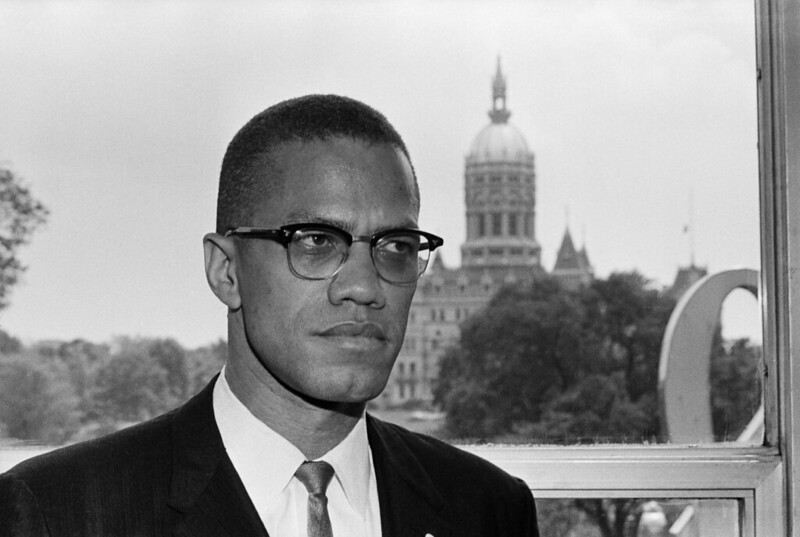
    colorized Malcolm X

    Confirming What We Long Suspected

    The recent press conference led by Ben Crump marked a turning point in Hassan’s life and the broader pursuit of justice.

    Hassan finally broke his silence, sharing his vivid recollections of that tragic day. His account, supported by archival photos and video footage, shed light on the events in the Audubon Ballroom.

    Hassan’s revelations resonate deeply, not only for the historical significance of the Malcolm X case but also for the broader discourse on civil rights, accountability, and the pursuit of truth.

    Advocate for the Truth with Kennedys and King

    Hassan’s voice, once silenced by time, now resounds as a call for truth and justice, urging us to confront the past and ensure that history is recorded and understood. Join hands with Kennedys and King in this endeavor.

    Call for the truth behind the political assassinations of the 1960s related to the civil rights movement and the prolific JFK and RFK assassinations.

    Get in touch for support and assistance.

  • The Illegal Postponement of the JFK Records Act: An Explainer

    The Illegal Postponement of the JFK Records Act: An Explainer

    Since the JFK Records Act reached its October 2017 deadline, the Trump and Biden Administrations have been hit with widespread criticism and, in President Biden’s case, a lawsuit for postponing the release of several important documents regarding the John F. Kennedy assassination.

    While the law allows exemptions, it outlines when they are allowed and puts the burden of proof on agencies. For more on these exemptions, read our full blog here.

    Let’s explore the postponement and why it’s against the law, shall we?

    It Happened One Friday

    In the late hours of Friday, June 30, 2023, long after Washington DC’s media elite had filed their reports and well after dedicated pundits had departed for their July 4th celebrations in the Hamptons, the Biden Administration issued an Executive Memorandum.

    This move has been widely criticized as an illegitimate attempt to terminate the JFK Records Act and seize control over legislative processes and records, hurting the very spirit of this Congressional Act.

    The JFK Records Act: A Background

    The JFK Records Collection Act of 1992 was enacted to promote transparency and public access to government records related to the assassination of President John F. Kennedy. Its primary purpose was to require federal agencies, particularly those involved in the investigation of the assassination, to disclose and make available to the public all records and documents related to this historic event.

    By passing this Act, the government aimed to provide a comprehensive and unclassified record of the Kennedy assassination, thereby enhancing public understanding of the event and addressing various conspiracy theories and uncertainties that had arisen over the years.

    This legislation was instrumental in ensuring that civilians had access to a significant historical record and could scrutinize the details surrounding President Kennedy’s tragic death. It also reflected a commitment to openness in government and the principle that certain historical records should be made accessible to the public after a specific period.

    George Bush

    Why is the JFK Records Act Postponement Illegal?

    Below are some reasons the incessant postponement is against the law.

    • The Act mandated the public release of JFK assassination-related records by October 26, 2017, unless stringent postponement criteria were met—they were not, hence the lawsuit against President Biden.
    • A postponement necessitated clear and convincing evidence, with the President required to provide unclassified explanations for each delayed record.
    • The President’s postponement authority extended solely to Executive Branch records, excluding legislative branch records.
    • Each record had to be accompanied by an Identification Aid detailing its particulars and the legal grounds for postponement.
    • The National Archivist’s role involved maintaining transparency through the upkeep of Identification Aids and a publicly accessible directory.
    • A “presumption of disclosure” was established, shifting the burden to agencies to demonstrate the necessity of postponement.
    • The Assassination Records Review Board (ARRB) oversaw compliance, releasing records unless they strictly met the postponement criteria outlined in the Act.

    Discover more about the illegitimate nature of this postponement at Kennedys and King. We keep an eye on and call out each indiscretion of intelligence agencies and the government’s executive and administrative branches regarding the JFK assassination and other political assassinations of the 1960s.

    Reach out for queries and concerns.

  • A Little-Known Tale of Allen Dulles and “The Farm”

    A Little-Known Tale of Allen Dulles and “The Farm”

    Camp Peary, or “The Farm,” is a name whispered in the shadows. Ensconced in the woods of Virginia, this covert training facility has played a pivotal role in the history of American espionage. But many may not know its intriguing connection to the former director of the CIA, Allen Dulles, and the enigmatic JFK assassination. Check out our blog for the details.

    Stick around for a brief exploration of Allen Dulles’s whereabouts on the assassination weekend.

    The Purpose of Camp Peary

    Camp Peary,” “The Farm,” and “The Country Club” are all names used for a sprawling 9,000-acre property located near Williamsburg, Virginia.

    It is a highly secretive and secure US military reservation established during World War II that started as grounds for covert intelligence training, including espionage, sabotage, and other covert operations.

    The Allen Dulles and Camp Peary Connection

    Robert Morrow, a dedicated assassination of John F. Kennedy researcher, recently made a significant discovery in the Dulles Archives at the Princeton Library. David Talbot discusses this discovery in his Allen Dulles biography, The Devil’s Chessboard. Unfortunately, it had been lost during a Dulles files reorganization, which disrupted its reference pages.

    However, Morrow requested assistance from the archivists to recover this vital information, and they found it within a complex digital file. This finding reinforces the claim made in an invaluable day-by-day calendar datebook.

    The datebook indicates that Dulles was in Washington that day but did not spend the late afternoon or evening at his Georgetown home. Instead, he was at Camp Peary.

    The datebook records Dulles’s presence there from late Friday afternoon through the assassination weekend and the following events: The autopsy, Lee Harvey Oswald’s detention, and the latter’s assassination.

    Jack Ruby Pointing a Gun Shortly Before Fatally Shooting Lee Harvey Oswald

    The JFK Assassination and Allen Dulles Connection

    After being relieved of his CIA duties by President Kennedy in 1961, Dulles remained deeply connected to intelligence networks.

    Following his dismissal by President Kennedy after the Bay of Pigs, Dulles held regular meetings with high-ranking CIA officials. He also had encounters with a prominent Cuban exile leader, Paulino Sierra Martinez, as noted by Talbot in his book.

    In the spring of 1963, Martinez met Dulles and General Lucius D. Clay, who had clashed with Kennedy over issues like the Bay of Pigs and the Berlin Crisis.

    Martinez operated mainly from Chicago, a city linked to the infamous Chicago Plot to assassinate JFK. Homer Echeverria claimed his group would receive funds once they dealt with Kennedy. According to Secret Service sources, Echeverria’s weapon purchases were reportedly financed by Martinez with alleged mob funds.

    It doesn’t bode well for a CIA director who was relieved of his duties to meet with people tied to a different JFK assassination attempt.

    Explore These Lines of Inquiry at Kennedys and King

    Camp Peary, Allen Dulles, and their alleged connection to the JFK assassination is a tale shrouded in mystery, intrigue, and controversy.

    Explore this and other credible theories further at Kennedys and King, a platform dedicated to finding the truth behind the assassinations of John F. Kennedy, Bobby Kennedy, Malcolm X, and Martin Luther King.

    Reach out for further assistance.

  • What is the John F. Kennedy Assassination Records Collection Act?

    What is the John F. Kennedy Assassination Records Collection Act?

    The assassination of John F. Kennedy remains one of the most enduring mysteries in American history. In the subsequent decades, various investigations, conspiracy theories, public demand for transparency, and our collective endeavors resulted in the JFK Assassination Records Collection Act.

    As President Joe Biden and the CIA attempt to thwart this crucial legislation, let’s remind ourselves of its main points and significance in unraveling the mysteries surrounding the JFK assassination.

    Mandatory Disclosure

    The JFK Records Collection Act was signed into law by President George H.W. Bush on October 26, 1992. It mandated the release of all government records related to the assassination of President Kennedy classified by federal agencies.

    It set a deadline for disclosure, requiring all records to be made public no later than 25 years after its enactment, which was October 26, 2017. It’s worth noting that the most recent JFK documents were released earlier this year, jumping the deadline by almost six years.

    Establishment of the Assassination Records Review Board

    The JFK Records Collection Act established the Assassination Records Review Board, or ARRB. It is an independent agency overseeing the review and release of assassination records.

    The ARRB’s mission is to ensure maximum public disclosure of documents related to the assassination. It is also responsible for identifying and securing records that might not have been previously disclosed or redacted in previous disclosures.

    President John F. Kennedy Standing Alongside Center Director Kurt Debus

    The Exemptions

    While the JFK Records Collection Act aimed for transparency, it did provide for some exceptions. Records could be withheld if their release would harm national security, foreign relations, law enforcement, intelligence sources and methods, or any identifiable individuals’ privacy.

    While these exemptions were expected to be used sparingly and proven beyond a reasonable doubt by an agency, they have been abused by the powers that be to conceal the truth behind JFK assassination.

    Public and Congressional Access

    Lastly, and most importantly, the Act allowed the public and congressional committees to access the disclosed records, providing a mechanism for independent examination and scrutiny of the documents.

    The Impact and Importance of the JFK Records Collection Act

    The JFK Records Collection Act has profoundly impacted the public’s understanding of the assassination and the government’s handling of related records. By setting a clear framework for releasing documents and creating an independent oversight body, it aims to address suspicions of cover-ups and conspiracy.

    Unfortunately, if this Act of Congress can be denied, it can also be abolished, as evidenced by President Biden’s Executive Memorandum that all but wrote it off entirely. We need your support now more than ever to push for the truth behind the assassination of John F. Kennedy.

    Get in touch to know how you can help.

    The assassination of President John F. Kennedy remains one of the most enduring mysteries in American history. In the subsequent decades, various investigations, conspiracy theories, public demand for transparency, and our collective endeavors resulted in the JFK Assassination Records Collection Act.

    As President Joe Biden and the CIA attempt to thwart this crucial legislation, let’s remind ourselves of its main points and significance in unraveling the mysteries surrounding the JFK assassination.

    Mandatory Disclosure

    The JFK Records Collection Act was signed into law by President George H.W. Bush on October 26, 1992. It mandated the release of all government records related to the assassination of President Kennedy classified by federal agencies.

    It set a deadline for disclosure, requiring all records to be made public no later than 25 years after its enactment, which was October 26, 2017. It’s worth noting that the most recent JFK documents were released earlier this year, jumping the deadline by almost six years.

    Establishment of the Assassination Records Review Board

    The JFK Records Collection Act established the Assassination Records Review Board, or ARRB. It is an independent agency overseeing the review and release of assassination records.

    The ARRB’s mission is to ensure maximum public disclosure of documents related to the assassination. It is also responsible for identifying and securing records that might not have been previously disclosed or redacted in previous disclosures.

    Image Filename: JFK-with-Kurt-Debus

    Image Alt Text: President John F. Kennedy Standing Alongside Center Director Kurt Debus

    The Exemptions

    While the JFK Records Collection Act aimed for transparency, it did provide for some exceptions. Records could be withheld if their release would harm national security, foreign relations, law enforcement, intelligence sources and methods, or any identifiable individuals’ privacy.

    While these exemptions were expected to be used sparingly and proven beyond a reasonable doubt by an agency, they have been abused by the powers that be to conceal the truth behind the JFK assassination.

    Public and Congressional Access

    Lastly, and most importantly, the Act allowed the public and congressional committees to access the disclosed records, providing a mechanism for independent examination and scrutiny of the documents.

    The Impact and Importance of the JFK Records Collection Act

    The JFK Records Collection Act has profoundly impacted the public’s understanding of the assassination and the government’s handling of related records. By setting a clear framework for releasing documents and creating an independent oversight body, it aims to address suspicions of cover-ups and conspiracy.

    Unfortunately, if this Act of Congress can be denied, it can also be abolished, as evidenced by President Biden’s Executive Memorandum that all but wrote it off entirely. We need your support now more than ever to push for the truth behind the assassination of John F. Kennedy.

    Get in touch to know how you can help.

  • Mark Mahoney’s Take on the Sixth Floor Museum’s Claims

    Mark Mahoney’s Take on the Sixth Floor Museum’s Claims

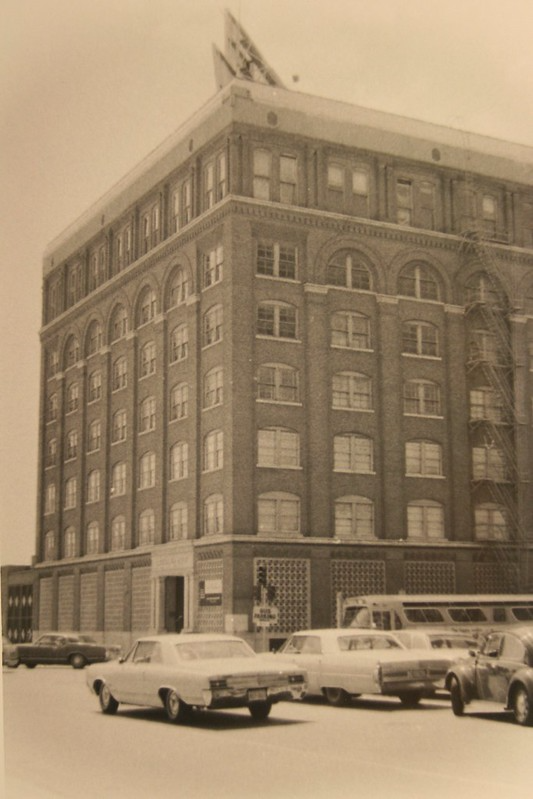
    The official narrative is that President John F. Kennedy was shot from the window of what is now The Sixth Floor Museum. This was established decades ago, but seeing how it holds up now is imperative. Click here to check out the longer version of Mark Mahoney’s findings.

    Keep reading for a brief overview of the same.  

    The Sixth Floor Museum Treatment of Witness Testimony

    The Dallas museum acknowledges witnesses’ accounts of gunfire from the grassy knoll, smoke seen, and suspicious activity near the rail yards.

    However, it fails to mention fresh cigarette butts and footprints where the smoke was reported. Lee Bowers’ flash of light and an unusual shape in the Moorman photo strengthen the case for an unidentified presence at the scene.

    These overlooked clues shed new light on the JFK assassination.

    The Contradictions from the Photographic Evidence

    The Sixth Floor Museum also states that “the easternmost window on the south wall was half open,” though photographic evidence indicates that the window was merely a quarter open.

    Additionally, the mention of a paper bag in the far east corner, supposedly used to transport the rifle, belies the absence of this bag in crime scene photos. Moreover, examining the Warren Commission’s subchapter, “The Long and Bulky Package,” reveals substantial doubts regarding the feasibility of a rifle fitting inside Oswald’s bag.

    These discrepancies prompt a critical reevaluation of the John F. Kennedy assassination narrative.

     JFK motorcade

    The Finger and Palm Prints

    The museum asserts that Lee Harvey Oswald’s fingerprints and palm prints were discovered on numerous cartons and a paper bag. However, referencing Chapter 4 of the Warren Report, it becomes evident that the Commission itself admitted that the key box at the window, used as a gun rest, and the adjacent box contained no prints attributable to Oswald.

    Significantly, Oswald’s prints were found on one box and another nearby. This, however, should be considered, given that Oswald was employed in the building, and the Commission acknowledged the possibility that he had handled these cartons as part of his routine duties.

    Furthermore, only one of these prints was less than three days old, with the Commission acknowledging that it could have been placed on the carton at any time during this period. Consequently, they concluded that the prints do not definitively establish the exact time Oswald was present.

    Read the Blog for More Insights About the Sixth Floor Museum

    The Sixth Floor Museum is a harmful exhibit, for most of the tidbits it perpetuates are factoids and have been debunked by photographic evidence and the Warren Commission results. Read the complete blog for a thorough analysis, and follow us to keep tabs on new developments in the JFK assassination.

    Contact us for inquiries and concerns.

  • The Life and Death of Mobster Sam Giancana

    The Life and Death of Mobster Sam Giancana

    James DiEugenio recently revisited the life, death, and circumstances surrounding the demise of American mobster Sam Giancana, who ruled the Chicago outfit in the 1950s and 1960s. Tap here to check out Part 1 of DiEugenio’s article.

    Keep reading for a preview of the man the Warren Commission couldn’t directly implicate in the assassination of John F. Kennedy.

    The Early Life of Sam Giancana

    Sam Giancana, originally Salvatore Giangana, hailed from a Sicilian family that settled in Chicago’s Italian neighborhood. While growing up under an abusive father, Sam’s troubled youth led him to join a gang called The 42s, where he learned criminal skills and how to manipulate the system.

    His involvement in bootlegging during Prohibition brought him to the attention of the Chicago mob. He eventually became a driver for Al Capone’s gang. Following Capone’s imprisonment, Giancana continued his criminal activities.

    In prison, he formed connections with Eddie Jones, a leader in the African American lottery racket. It was then Giancana realized the huge profit margin in the racket surpassed other criminal enterprises.

    Sam Giancana Joins the Chicago Mob

    When Sam Giancana kidnapped Jones and forced him to hand over the racket in exchange for a cut of the profits and a lump sum payment, he piqued the interest of Chicago mob leaders. They elevated Giancana’s status within the organization.

    Giancana’s reign faced challenges, including the Kefauver hearings on organized crime and the exposure of the Apalachin meeting. The formation of the McClellan Committee further intensified scrutiny of organized crime, with Robert F. Kennedy leading investigations. Giancana’s encounter with the committee showcased his criminal reputation.

    Meanwhile, the FBI began surveilling Giancana and The Outfit with approved wiretaps on their meeting places. Surprisingly, the CIA recruited Giancana to participate in a plot to assassinate Fidel Castro.

    President John F. Kennedy on a Dias Facing an Audience

    Did Giancana Help John F. Kennedy?

    The idea that Giancana helped Kennedy win in Illinois is debunked by author John Binder, who found no evidence of such influence. The claims of mob involvement in the West Virginia primary are also questionable, as no credible sources support them.

    These conspiracy theories serve as revenge by criminals against the Kennedy family, but they lack credibility and reflect the shallow culture of sensational tabloid narratives.

    DiEugenio’s Closing Statements

    The 2011 documentary, Momo: The Sam Giancana Story explores the events surrounding President Kennedy’s assassination and Giancana’s murder in Chicago. While the film features the involvement of Blasi and Accardo, it contradicts Chuck Giancana’s version regarding the assassins and the roles played by Tippit and White. There are conflicting accounts regarding Giancana’s whereabouts during that day.

    FBI agent William Roemer, who conducted surveillance on Giancana, discovered no evidence or discussions suggesting an attempt on JFKs life. The differing narratives provided by Giancana’s brothers add further complexity to the narrative.

    The limited scope of today’s blog cannot entirely encompass the life of mobster Sam Giancana. Check out DiEugenio’s two-part article based on Momo: The Sam Giancana Story, and share your thoughts about the claim that he might have had something to do with the John F. Kennedy assassination.

    Contact us to share your feedback and alternative theories.