Author: Jake Fernandez

  • 3 Shocking Facts About the JFK Assassination

    3 Shocking Facts About the JFK Assassination

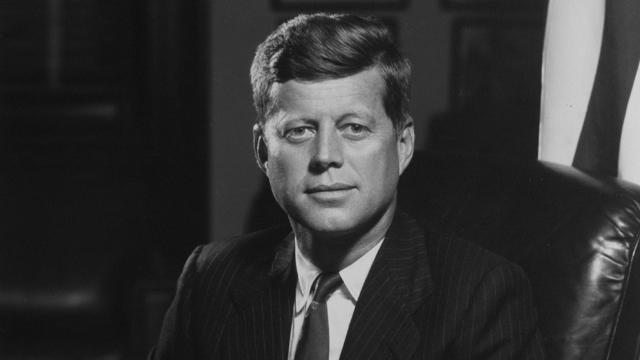
    Nearly 60 years ago, just after noon, the US lost a critical figurehead in the Cold War against the Soviet Union. Condolences came pouring in from all parts of the world as soon as the news got out that US President John F. Kennedy had been assassinated. Click here for a snippet.

    With every public disclosure, we have seen shocking revelation after shocking revelation following the events of that day.

    1. No Dismissals

    The assassination of John F. Kennedy, the Commander-in-Chief of one of the most powerful countries in the world, was by all appearances a major intelligence failure. However, not one person from the FBI, CIA, President Kennedy’s security detail, or the Secret Service lost their job.

    James Rowley, the Director of the Secret Service, retained his position until his retirement in 1973. Moreover, no one from the security detail escorting Kennedy on that last day was relieved of their duties. According to Rowley, everyone was fit for the job, but none came through when the President needed their protection.

    2. Missed Barrel Swabs

    When President Kennedy was assassinated, conducting barrel swabs was a standard procedure. However, the crime labs that received the alleged murder weapon failed to run this test and ignored many other scientific procedures that would’ve proven, beyond a reasonable doubt, whether or not the Mannlicher-Carcano rifle was used in the attack.

    The FBI crime lab technician Robert A. Frazier, testifying in front of the Warren Committee, said they didn’t examine the weapon for metal fouling. The same was the curious case with the Dallas law enforcement crime lab. Most routine ballistics and biological tests were never conducted after this assassination, even though the alleged murder weapon was recovered almost immediately.

    Kennedy with his head down

    3. No Grand Jury

    We will never stop finding it strange that a US President was murdered in the middle of a packed street, and no grand jury was gathered to investigate it. Grand juries are empaneled when there is an open homicide case at hand.

    Not doing so and forming the highly dubious warren commission results sent a clear message: the government and intelligence don’t consider the JFK assassination an unsolved murder worthy of further investigation but an already solved murder with undefined motives. They were on a fact-finding mission and did not intend to find the real killer(s) and bring them to justice.

    Find More Shocking Revelations on Kennedys and King

    Visit Kennedys and King if you’re on board with us when we say that the JFK assassination was entitled to a proper trial with state prosecutors, public defenders, a grand jury, and a judge. It was robbed of that the day the controversial findings of the Warren Commission were released.

    Read about the events surrounding his death and possible evidence-based motives behind the assassination of John F. Kennedy and other political assassinations of the 1960s.

    Get in touch to share your thoughts and feedback.
  • Revisiting Martin Luther King’s Idea of Universal Basic Income

    Revisiting Martin Luther King’s Idea of Universal Basic Income

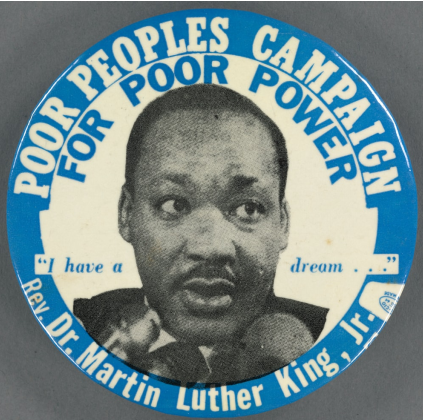
    During the last decade of his life, Martin Luther King’s civil rights activism took on a universal spin. He started advocating for equal civil rights for the poverty-struck community, not just the African American diaspora.

    Universal basic income was a part of this economic dream. Let’s discuss this ideal that was so callously interrupted by the assassination of Martin Luther King.

    What is Universal Basic Income?

    Universal basic income would’ve guaranteed that every American got a mandatory middle-class income to make ends meet. Also known as guaranteed income, this would have ensured every citizen a set share of living expenses yearly instead of the minimum wage, which is neither realistic nor sufficient for a college student to pay off their loans.

    modernized version of this welfare recipient program proposed by Charles Murray, a conservative scholar, would see every legal adult get a set sum of $10,000 annually.

    King’s Universal Basic Income

    King’s idea of a universal basic income went beyond anything proposed today. If anything, we should be taking notes from the ideas perpetuated during the ’60s because they were just that ahead of their times.

    King’s vision has gone into great detail about the universal basic income in Where Do We Go From Here: Chaos or Community? A book that would go on to be his last. While acknowledging the government’s overtures to address poverty through education and housing, King also said they weren’t nearly enough to eradicate poverty.

    In his opinion, the government needed a direct approach to ending poverty. In other words, this meant addressing more of the “what” and less of the “why”; the latter wasn’t doing anything to improve their lives.

    march for jobs banner

    Create a Universal Basic Income to Create Jobs

    It should be noted that King wasn’t trying to make a case for an income whether or not you were employed. When he said the US wasn’t doing nearly enough for the poor despite growing economically rich every day, he meant that the government—the system—was disregarding the poor because it saw them as inferior.

    If a decent income is what it takes for the system to see these people as equals and provide them with equal job opportunities, a decent, guaranteed income is what they should get. He wanted everyone to work and the government to guarantee a middle-class income by creating job opportunities for conventional and unconventional skill sets.

    The Final Setback

    Universal basic income was an important aspect of King’s Poor People’s Campaign. It had already experienced a setback because of King’s ongoing criticism of the US involvement in the aftermath of vietnam war.

    Its final setback came in the form of the MLK assassination. Visit Kennedys and King to learn more about the events surrounding his assassination, particularly the threat he presented as an important pillar of the Civil Rights Movement.

    Reach out for inquiries and updates.

  • How to Make Every Day Martin Luther King Day

    How to Make Every Day Martin Luther King Day

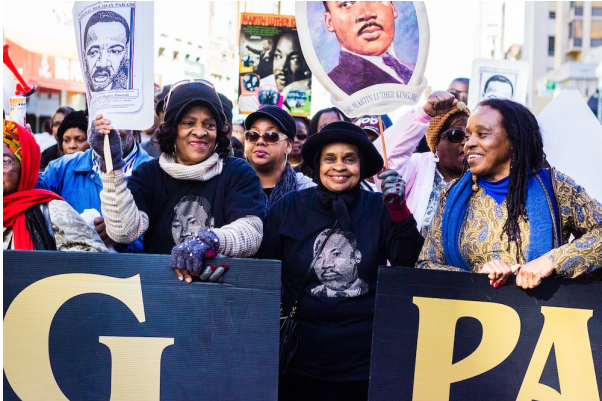
    Martin Luther King Day is celebrated on the third Monday of every year, a day before the civil rights leader was officially born. Click here to see how we did it in 2017. It’s a day to not only celebrate the life and legacy of a great leader but also to teach his ideas of freedom and racial equality to a whole new generation.

    Check out the following ideas to make every third Monday an MLK Day.

    Prepare an Interactive Presentation

    Keep this unofficial MLK Monday simple by informing young kids about King, but make it interactive through a colorful presentation and lots of opportunities for input.

    Treat the quiz part of your presentation as a pop-up book. For instance, blank out the “dream” in “I have a dream” and follow it with a slide depicting the blanked word. Sprinkle these small quizzes throughout the presentation to retain their attention from start to end.

    Encourage Mixed Interaction

    MLK’s “I Have a Dream” speech defined his entire struggle. It spoke of a world where people of all races would unite and create a just and equal world. Unfortunately, a large part of his dream remains unrealized due to a racist system that promotes modern-day segregation.

    If you know what we’re talking about, you know what we mean by encouraging mixed interactions. Don’t let the different experiences of these kids stop them from mingling. You can get your students to sit with someone else for a change if you’re a teacher. You can do this during lunch, homeroom, or class. Do this every month for long enough, and you’ll see a level of comfort between students.

    students in a library

    Speak on Equal Civil Rights

    Take this chance to mold your kids into future leaders. King is best known for “I Have a Dream,” a speech he gave during the March on Washington. Make your children read the transcript of that speech, and sit with them to write an equally riveting piece of text about equal civil rights.

    Encourage your children to write exactly how they want to see the US one day. You can create a bullet point sheet of their ideal future and then ask them to use these points and turn them into a speech, emulating MLK’s style.

    Assign a Reading Task

    You don’t have to be a teacher to assign your kids a reading task, not with Kennedys and King at your disposal. Suppose you want your children to learn nothing but the truth behind the Assassination of Martin Luther King. In that case, we suggest taking excerpts from our archives, preparing multiple-choice and fill-in-the-blank questions, and assigning them as an individual, pair-or group-based reading comprehension activity.

    Follow suit with the other political figures covered by our platform. Browse our website to take a closer look at the assassinations of John F. Kennedy, Bobby Kennedy, Martin Luther King, and Malcolm X.

    Get in touch to share feedback and concerns regarding our content.

  • How the JFK Assassination Changed American Politics

    How the JFK Assassination Changed American Politics

    The assassination of John F. Kennedy wasn’t the first attempt of its kind. Like its predecessors, this unsolved political murder made the people stop and mourn the loss of a great leader. It also led to many changes in the following years. Click here for JFK assassination archives.

    Below is an overview of how the assassination revolutionized American politics.

    The Civil Rights Act Was Passed Earlier

    After President Lyndon B. Johnson took office in 1964, he and his allies got the Civil Rights Act—one of his predecessor’s agendas and his campaign pledge—passed. While Kennedy prevented segregation bills from being passed, he faced strong opposition and resistance regarding American civil rights in Congress.

    However, despite all the pressure and resistance, he was determined to propose his bill in 1964. After his death, the baton passed to his brother Bobby Kennedy, who was equally determined to see it through. While the bill was always meant to be tabled in 1964, his assassination certainly escalated its passing.

    The Cold War Got a New Life

    Kennedy gained public favor after the way he resolved the Cuban Missile Crisis by having back-door discussions with Nikita Khrushchev through trusted third parties. Just when the US and Russia were on the verge of a full-scale war, Kennedy extended a well-received deal to the then-Russian premiere.

    Unfortunately, Kennedy’s assassination happened at the height of the Cold War. Russia restored its aggressive, hardline stance against the US after Presidents Lyndon, Nixon, Ford, and Carter took office, and the Cold War continued to rage on until the fall of the Berlin Wall. Thus, the JFK assassination lengthened the Cold War.

    Cold War

    More Lives Lost in the Vietnam War

    Kennedy wanted to send advisors instead of troops to Vietnam, as evidenced by the disclosed planning documents dated two days before his death. His previous resolution patterns during the Cuban Missile Crisis and Bay of Pigs Invasion made it clear that he preferred diplomatic solutions to military interventions. Koji Masutani’s2009 movie, Vietnam If Kennedy Had Livedsupports this idea.

    When Johnson took office, he manipulated Congress to approve a disastrous resolution that allowed him to infiltrate Vietnam by sending thousands of troops. In the end, the Johnson and Nixon administrations supported a war that lasted tenodd years and killed 58,220 American troops and more than a million Vietnamese people.

    The Civil Rights Act wasn’t the only good thing to come out of the assassination of John F. Kennedy, nor were the Vietnam and Cold Wars the only consequences of his death. Learn more about the years following his death at Kennedys and King. Please support our cause, help us learn the truth behind the political assassinations of the 1960s, and be the first to discover newly disclosed documents related to the JFK assassination.

    Contact us to share your insights and thoughts.

  • Who Else Fell Victim to the JFK Assassination?

    Who Else Fell Victim to the JFK Assassination?

    President John F. Kennedy was assassinated on November 22, 1963, while passing through Dealey Plaza inside an open motorcade with his wife, Jacqueline Kennedy, John Connally, the then-Governor of Texas, and his wife, Idanell Connally. Click here for more details.

    Kennedy wasn’t the only person to lose his life in the attack, nor was he the only victim, surviving or otherwise.

    John Connally

    The Texas Governor met Kennedy the day before the assassination. He had been the governor for tenmonths and had already accompanied the President in San Antonio and Houston. After a quick stop at Forth Worth, they flew to Kennedy’s final destination, Dallas. 

    When the first shots rang out a little after noon, Connally clearly remembers feeling like someone had punched him twice in the back. He was soon covered in blood and viscera that he, at the time, thought was his own before passing out.

    Connally ultimately survived the attack, but not before undergoing surgery for several injuries encompassing his thigh, wrist, chest, and back. While he generally agreed with the controversial findings of the Warren Commission, he disagreed with the single-bullet theory.

    J.D. Tippit

    J.D. Tippit has been a law enforcement officer for the Dallas Police Department for 11 years at the time of the assassination. He was no stranger to violence, having served in World War II and sustaining multiple injuries as a cop.

    The day of the assassination started just as any other day for Tippit. Official accounts place him on duty patrolling nearby Oak Cliff, and his alleged time of death was roughly 45 minutes after the attack on Kennedy. The official accounts place him talking to the alleged assassin and getting shot to death soon after, but we know to take such testimonies with a grain of salt.

    motorcade

    James Tague

    James Tague isn’t your average JFK assassination victim. However, before making a career out of the incident, he was a regular car salesman. On the day of the murder, he was stuck in traffic on his way to meet his fiancée for lunch.

    As he got out of the vehicle, a misfired bullet reportedly hit the curb next to him and sent debris flying everywhere, including his right cheek. His injury was minor, but it became a turning point in his life. Although he initially agreed with the findings of the Warren Commission, he later recanted his statements and has even published two books presenting alternate solutions to the Warren Commission.

    At Kennedys and King, we seek to denounce conspiracy theorists and seek the truth behind JFK assassination. Please contribute to our cause to advocate for full public disclosure ofthe political assassinations of the 1960s, including those of Martin Luther King, Robert F. Kennedy, John F. Kennedy, and Malcolm X.

    Reach out to share your thoughts and comments.

  • How the World Reacted to the JFK Assassination

    How the World Reacted to the JFK Assassination

    We all know how John F. Kennedy was assassinated. What we don’t know is who had him murdered. See how far we have come in solving this mystery here.

    While the search for his killer(s) continues, let’s examine how the world reacted to the John F. Kennedy assassination.

    Disbelief in Taiwan

    Taiwan has been one of the most long-lasting strategic allies of the US. The assassination of John F. Kennedy left the country nonplussed and aggrieved.

    If Generalissimo Chiang Kai‐shek’s words are to be believed, their genuine shock had to do with a perception of the bulletproof security detail provided to chiefs of state. Before President Kennedy’s murder, the assassination of a president was unheard of in Taiwan.

    Empathy in Hong Kong

    Hong Kong termed President Kennedy’s death a not quite “purely American loss.” Kennedy’s stands in the Cuban missile crisis and South Vietnam made him quite popular in Southeast Asia.

    At the time of his death, the US was also winning against rival communist countries in Asia. Many in Hong Kong believed the assassination would significantly weaken America’s position.

    Kennedy with German chancellor

    Morbid Curiosity in Israel

    Save some Orthodox Jews who eschewed tuning into the shocking news for Sabbath, Israelis were drawn to their radios following the news of the JFK assassination. While the president had passed away on his way to the nearest hospital, news spread much slower in those days.

    However, it still spread much faster than any other news. The US Ambassador to Israel at the time, Walworth Barbour, also made a radio appearance, thanking the Israeli people and founder and first prime minister of the State of Israel, David Ben‐Gurion for expressing their condolences.

    Condolences from Greece

    An outpouring of support and condolences emerged from Greece following the President’s assassination. Among the JFK tributes was a book of condolences signed by 2,000 Greeks at the US embassy in Athens.

    The country’s then-Prime Minister expressed his condolences and credited President Kennedy for extending mutual peace between the countries. He also welcomed continued cooperation with the new President, Lyndon B. Johnson.

    Join the Online Quest for Truth Behind the JFK Assassination

    Join Kennedys and King in its quest for the truth behind the political assassinations of the 1960s. Review our findings and analysis on the John F. Kennedy assassination and delve deeper into the unsolved political murders of Malcolm X, Robert F. Kennedy, and Martin Luther King.

    You can also contribute to our cause through donations, articles, phone trees, podcasts, and other multimedia through which you can demand the disclosure of documents and investigation findings.

    Reach out to ask questions and help us find answers to some of our own.

  • The Civil Rights Movement vs. The BLM Protests: A Comparative Analysis

    The Civil Rights Movement vs. The BLM Protests: A Comparative Analysis

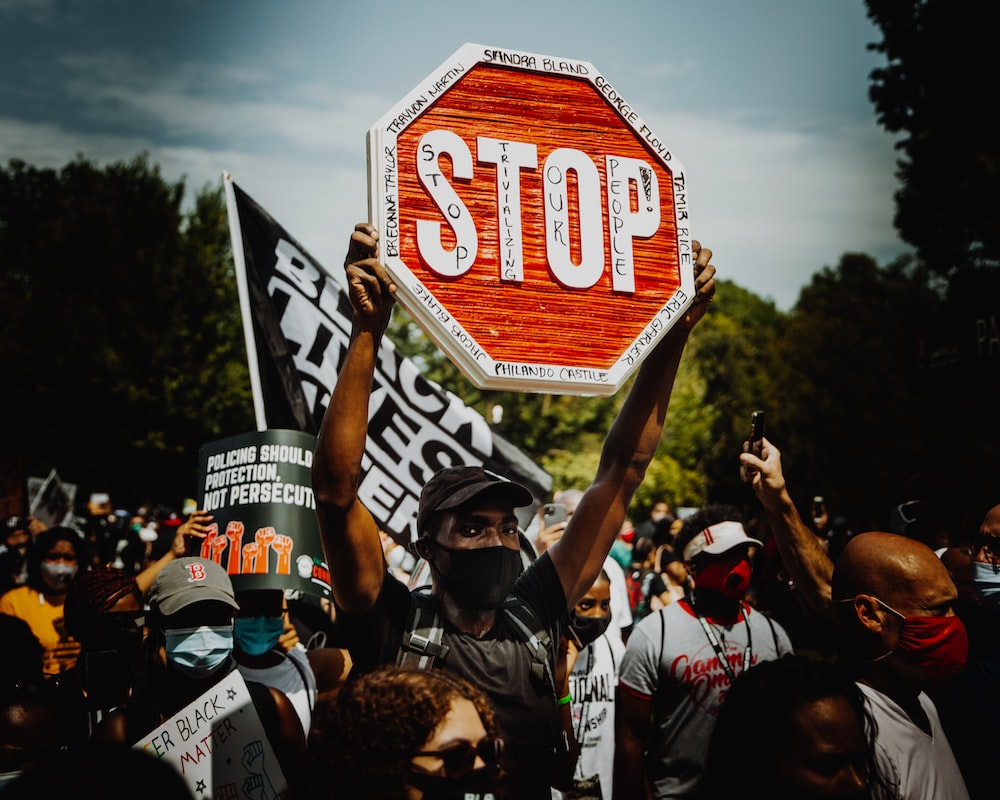
    The Civil Rights Movement was marred by the Malcolm X and Martin Luther King assassinations. More on that here. On the other hand, the Black Lives Matter protests were incited by the extrajudicial killings of George Floyd and Breonna Taylor. They happened amid an economic recession, nationwide lockdown, and climate change concerns.

    Let’s see how close a resemblance the BLM protests bear to the CRM.

    The Purpose

    CRM was a social movement against systemic racism and segregation between the mid-1950s and late-1960s.

    While CRM happened within the US, BLM was more of an international movement that started within the US but quickly spread to neighboring Canada and across the pond. Its main goal was to end racially motivated police violence against the black community.

    The Dissemination of News

    There was no Twitter or Facebook—no internet—during the ’50s and ’60s. During this time, the CRM found an unlikely ally in the press. Previously overshadowed by news about white people and reportage of black criminal activity, the white press soon found competition in the black press. The African American media became an avenue of protest and a way to spread the word for civil rights activists.

    Conversely, it was much easier to disseminate news during the BLM protests. The movement began using the hashtag #BlackLivesMatter to keep people updated, pressurize the criminal justice system and Congress to do right by the victims, and pass police reform bills.

    Civil Rights Act signing

    The Power of Boycotts

    Both movements are non-violent. They were carried forward through peaceful protests, fliers, news media, and boycotts. The latter was an incredibly powerful force for positive change during the CRM.

    Take the Montgomery Bus Boycott, for instance. Announced by the Montgomery Improvement Association after Rosa Parks was arrested for violating segregating laws, this 381-day boycott brought the operating bus company to its knees.

    Conversely, BLM protestors carried out a Black Friday boycott in Ferguson when a grand jury decided not to indict the killer of a black teen, resulting in an 11% reduction in sales in 2014.

    More Comparative Analysis to Come on Kennedys and King

    Share your comparative analysis with Kennedys and King, a platform dedicated to uncovering the truth behind the political assassinations of the 1960s, including the murders of Civil Rights leaders like Martin Luther King and Malcolm X. Contribute by spreading the word and sharing relevant multimedia and donations.

    Do you think there’s another way to extend our message to the masses? Feel free to share!

  • 3 FAQs About the Malcolm X Assassination—Answered!

    3 FAQs About the Malcolm X Assassination—Answered!

    Malcolm X was assassinated on February 21, 1965, while speaking at Harlem’s Audubon Ballroom. His death was quickly chalked up to bad blood between Malcolm and the Nation of Islam (NOI). The truth is anyone’s guess.

    Related: The Hidden Hand: The Assassination of Malcolm X

    Since the investigation into this assassination left more questions than answers, we’ve taken it upon ourselves to answer some of those questions.

    1. How Bad Was the Blood Between Malcolm X and NOI?

    Malcolm X cut ties with NOI in 1964, shortly before his death. His decision to leave didn’t come out of the blue. He was deeply uncomfortable with Elijah Muhammad’s infidelity and disheartened by NOI’s inaction against the LA police department’s violent behavior towards Muslims.

    The last straw was Malcolm breaking an important NOI policy about not reacting to John F. Kennedy’s assassination. Malcolm did, calling it “the chickens coming home to roost.” He left soon after being silenced from saying anything else about the incident. At the time of his assassination, he was widely seen by many NOI members as a traitor.

    2. How Did the Government Treat Malcolm X?

    It was rare for civil rights organization members not tobe under 24/7 surveillance by the FBI and law enforcement, and even rarer for these organizations to not have at least one FBI informant within their ranks.

    Malcolm was no exception. The FBI started surveilling him in March 1953. Their special infiltration unit, the Bureau of Special Services (BOSS), possibly infiltrated the organizations that Malcolm set up after leaving NOI.

    He was widely seen as a threat by law enforcement agencies, as evidenced by the communique by the then FBI Director J. Edgar Hoover that read, “do something about Malcolm X.”

    FBI building

    3. Were There Any Threats Made to Malcolm X?

    A week before his assassination, Malcolm X was asleep with his wife and children at his New York City residence when it was firebombed. No charges were made—it’s not like such antics against activists were rare in those days.

    It’s not clear whether the ones who made the threat ultimately killed him. However, the incident was nothing if not serious and was sure to have driven home the threat to his life and that of the people near and dear to him. Be that as it may, it didn’t prevent Malcolm from speaking out about the incident.

    Uncover the Mystery Surrounding the Malcolm X Assassination

    As the convictions of those accused of killing Malcolm X are overturned, join Kennedys and King to uncover the truth behind the incident once and for all. Go through our multimedia to know more than you ever have about the political assassinations of the 1960s, including the unsolved political murders of the Kennedy brothers, Martin Luther King, and Malcolm X.

    Get in touch to share your thoughts about our cause.

  • Highlights from MLK’s “Beyond Vietnam” Speech

    Highlights from MLK’s “Beyond Vietnam” Speech

    A little over 55 years ago, Martin Luther King gave a speech titled “Beyond Vietnam: A Time to Break Silence” at New York City’s Riverside Church. It divided the nation and drew heavy criticism from major newspapers, political organizations, and fellow activists. Exactly a year later, he was assassinated. Click here for details.

    The Point of “Beyond Vietnam”

    “Beyond Vietnam” was the first time MLK went on record to state his opinion on the Vietnam War. He was addressing a gathering of 3,000, so it was guaranteed to elicit a reaction.

    King categorically condemned the Vietnam War, calling it an economic and human burden on the country’s poor working class. He called for the resources being spent on the war to be redirected to equal rights for America’s minorities.

    His opinions drew the furor of many and the support of some. The former either termed it unpatriotic or claimed it threw a wrench in the civil rights movement Malcolm X by making it an extension of the more radical peace movement.

    Following are the highlights from his memorable, opinion-shaping speech.

    “An Enemy of the Poor”

    By terming war “an enemy of the poor,” MLK meant that the Poor People’s Campaign, which was flourishing before the war, was in shambles as soon as those very poor people were sent off to a senseless war.

    The civil rights leader sounded resigned when he said he knew better than to think the US government would ever divert funds towards rehabilitating the country’s poor white and black people.

    homeless man

    “In Brutal Solidarity”

    King used the word “in brutal solidarity” to describe white and black people who were united in the cruelest way possible. They were being sent 8,000 miles away from home to guarantee freedom and restore the rights of an entirely different population when they hardly had any civil rights at home.

    Instead of seating white and black students together, we’re uniting them in a matter of life and death. He called it a “manipulation” of America’s poverty-stricken community.

    “This Self-Defeating Path”

    King termed hate a “self-defeating path,” saying he wanted his country to stop worshipping concepts of hate and revenge. Although uttered 55 years ago, his words are just as relevant today because the US has not learned from history. Its foreign policies continue to override the issues back home that have worsened due to neglect and lack of effective action.

    By uttering those words, King wanted his country to take the high road, let bygones be bygones, and focus on its development.

    Coming Back to the Martin Luther King Assassination

    Martin Luther King gave his famous speech on April 4, 1967. Ironically, he was assassinated on April 4, 1968. The dates might be a coincidence, but the coverups that followed his assassination are no coincidence.

    Stay tuned as we challenge and debunk the many lies that have permeated the mainstream since the Assassination of Martin Luther King, John F. Kennedy, Robert F. Kennedy, and Malcolm X.

    Get in touch to contribute your thoughts, resources, and insights.

  • Taking Sides: Malcolm and Martin During the Civil Rights Movement

    Taking Sides: Malcolm and Martin During the Civil Rights Movement

    Although Malcolm X and Martin Luther King Jr. wanted equality and justice for their community, their visions were like two sides of the same coin. Unlike King, Malcolm X didn’t believe in racial integration or support the civil rights movement facts.

    In today’s Kennedys and King update, let’s explore these two political figures and where their paths met and diverged.

    Parallels Near the End

    Malcolm X flipped the script completely after returning from his pilgrimage to Mecca. After endorsing separation and promoting self-defense rhetoric his entire life, the activist started promoting brotherhood regardless of one’s race. This change was inspired by the integration, peace, and harmony between pilgrims in Mecca.

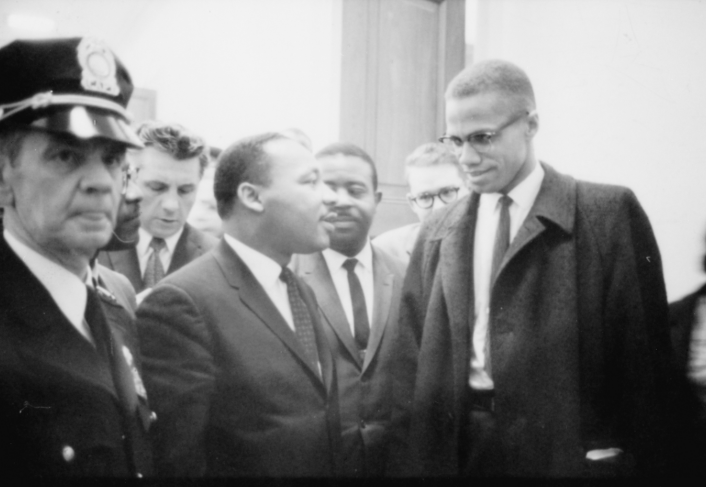
    He publicly recognized wanting the same thing as Dr. King: freedom. However, that was hardly the case for most of the minister’s life.

    Martin’s Interpretation of Freedom

    While King and Malcolm X wanted to free their community from the shackles of their brutal past, their approach was as different as day and night. King supported non-violence.

    He advocated for equal rights for all of humanity but never used unprovoked violence as the means to achieve them. The bills signed into law thanks to King’s contributions supported integration, not further segregation and isolation of the African American community.

    King only hired armed security detail when his Montgomery house was firebombed. In other words, he took up arms to safeguard the Civil Rights Movement, not to add an element of violence to it.

    Malcolm X

    Malcolm’s Interpretation of Freedom

    On the flip side, you have Malcolm X, who, unlike King, preferred street corners over churches. Embittered by the cruel way his elders were abducted from their homes, he denied being an American for most of his life. He even changed his last name to “X”, effectively removing the last name given to his forefathers by their masters.

    Unlike King, Malcolm’s allegiance to the Nation of Islam made him seek a separate, not united, society for his people. While he recommended self-defense over unprovoked police violence, his motto was “by any means necessary,” which one could interpret as a defense to any threat, even if that wasn’t his intention.

    The Road from Scorn to Admiration

    Malcolm X wasn’t all praise for Dr. Martin Luther King Jr. from the onset. He openly mocked and criticized the Civil Rights Movement, even going as far as to call the historic March on Washington a “farce” and “circus.”

    However, that all changed after the pilgrimage to Mecca and the ensuing estrangement with the Nation of Islam. Learn how Malcolm X perceived the Civil Rights Movement and Dr. King’s role before he joined the political assassinations of the 1960s on Kennedys and King. Delve deeper into the events before and after the malcolm x assassination and see how you can help us uncover the truth behind the political murders of that decade.

    Contact us for more information.