Category: Blogs

  • James DiEugenio’s Three Most Highly Recommended MLK TV Documentaries

    James DiEugenio’s Three Most Highly Recommended MLK TV Documentaries

    The year 2018 marked 50 years since Martin Luther King was assassinated. This landmark year saw an influx of multimedia, most debatable and some commendable, related to the MLK assassination.

    James DiEugenio reviewed and recommended three MLK TV documentaries, describing them as the best documentaries in recent years.

    Hope and Fury

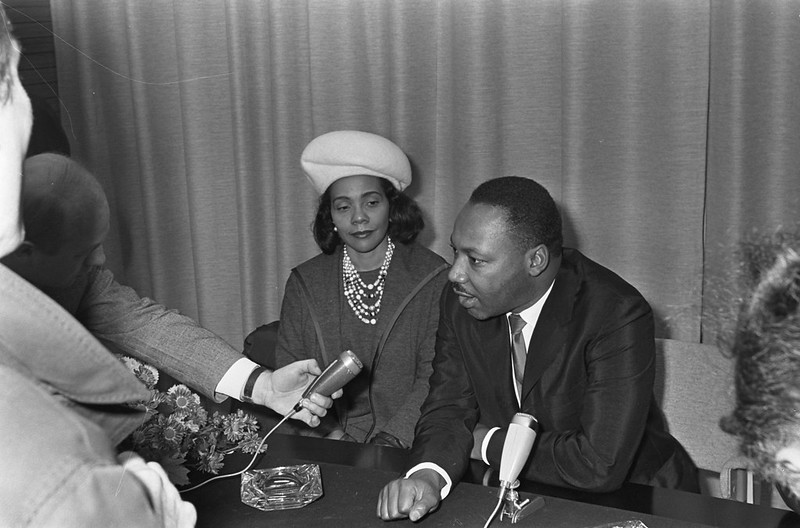
    NBC’s Hope and Furycelebrates the legacy of Martin Luther King, showing how the civil rights leader was way ahead of his time, using print and television media to highlight racial discrimination.

    The TV documentary shares never-before-seen videos and photographs revisiting the civil rights movement from fresh perspectives and interviews by civil rights leaders, reporters, and their contemporaries.

    This documentary is a comparative analysis of sorts. It draws parallels between the civil rights movement facts then and today’s Black Lives Matter movement, the racially-motivated murders of those times to the world we live in today, and likens traditional media to social media as a mass communication tool.

    I am MLK Jr.

    I am MLK Jr. is different from all the other MLK TV documentaries because it is less a biographical documentary and more an eye-opener for our modern generation. It tells them that the problems that plagued their country 50—now 55—years ago haven’t gone anywhere. The documentary also reveals never-before-heard recordings and interviews by civil rights activists, politicians, writers, and King’s comrades.

    The message of this documentary, as described in this review, is that celebrating King’s life is easy, but addressing the problems he faced requires a lot of work more than half a century after the fact.

    Detroit march

    King in the Wilderness

    DiEugenio declares HBO’s King in the Wilderness his favorite of the three MLK TV documentaries. It documents the last four years of King’s life, from the Voting Rights Act in 1965 to his untimely demise in 1968; that is one of the aspects that DiEugenio believes makes this documentary different from all the rest.

    Instead of condensing the 39 years of King’s life, the documentary starts near the end of King’s life and ends with his funeral. Unlike the other two TV documentaries, it doesn’t feature interviews and opinions of so-called experts on the life and death of Martin Luther King.

    On the contrary, the documentary features interviews by those who King considered nearest and dearest: his friends, colleagues, and comrades, including attorney Clarence Jones, Andrew Young, a colleague, Harry Belafonte, an actor and singer who King considered a friend, and many other public and not-so-public figures who knew King better than any other “expert” who never even came within two feet of the civil rights leader.

    Keep reading the review to know the finer points of King in the Wilderness, but don’t stop there. Browse Kennedys and King’s articles, to tell the truth from the mistruths and lies concerning the political assassinations of the 1960s. Know which MLK TV documentaries to avoid and which ones to watch by following this tag.

    Please support our cause to bring those responsible for the Martin Luther King assassination to justice.
  • How Not to Make Wrong Assumptions à la “The Assassin Next Door”

    How Not to Make Wrong Assumptions à la “The Assassin Next Door”

    The format of Hector Tobar’s essay “The Assassin Next Door” is like One Night in Miami. It explores personal identity set within the wider context of major events. While an interesting concept, Kennedys and King’s Jeff Carter has reviewed Tobar’s essay and found it replete with assumptions.

    Here are the assumptions that make this essay anything but a good resource when studying the assassination of Martin Luther King.

    James Earl Ray Killed MLK

    “The Assassin Next Door” loses any credibility from the title alone. Tobar assumes that James Earl Ray killed MLK when he calls him an assassin and compares his life trajectory with Ray’s.

    Tobar discovered from reading Gerald Posner’s Killing the Dream (more on that later) that Ray lived in the same East Hollywood neighborhood as him and compared his upbringing to Ray’s, not even stopping to consider the evidence belying his innocence.

    MLK’s Death was a Hate Crime

    The short essay transitions into Ray’s motives, which Tobar also gets from Posner’s book. In this case, it was the “hatred of black people.” We, as many others, disagree with this motive because Ray was not racist, or at least not racist, to the point of wanting King dead.

    Ray has categorically denied holding a racist perspective, as has his family and anyone else who visited him in prison. Unfortunately, Tobar uses the opposite as his basis, referencing uncorroborated statements and focusing on the wrong target to validate this highly invalid assumption.

    hate poster

    Interval: The Person Behind Killing the Dream

    Let’s now take a break from assumptions to explore Gerald Posner’s background. After all, it is what his essay “The Assassin Next Door” is based on.

    Killing the Dream received rave reviews in The New York TimesTime, and other book critics. It was a raging success, but, as discussed in this essay, the person behind it is guilty of many misdemeanors.

    Since this book’s publication, Posner has been accused of plagiarism, uncorroborated citations, bias, misinterpretation of available resources, and a lack of sourcing. This is the person Tobar uses as his primary resource in the essay.

    Assumption (Lack Thereof)

    Tobar isn’t fair in his assumptions. He assumes that Ray killed King because he was prejudiced but conveniently ignores the glaring reality of those times. Almost every echelon of the system, from the Memphis police to the intelligence, was racist.

    They had as much motive to kill King as Ray allegedly did, so why does Tobar not consider them suspects in the Assassination of Martin Luther King?

    Read Carter’s essay for further analysis and dissection of Tobar’s “The Assassin Next Door.” Once you’re done reading, click the MLK assassination tab to know what to read and what to avoid where this political murder is concerned.

    Get in touch or contribute to help us unearth the truth behind the political assassinations of the 1960s.

  • Black History Month: Remembering the Contributions of 4 Civil Rights Activists

    Black History Month: Remembering the Contributions of 4 Civil Rights Activists

    The US and, in turn, Kennedys and King has dedicated the month of February to celebrating and reminding people about the causes of the civil rights movement and the contributions of several African Americans who fought, often at the cost of their lives, for desegregation and equal rights.

    This Black History Month, Kennedys and King would like to draw your attention to the following civil rights activists.

    1. Rosa Parks

    At 92, Rosa Parks was one of the longest-surviving civil rights activists in history, especially considering the notoriously short lifespans of civil rights leaders during the movement. Her activism began at 42 after being arrested for sitting on the front end of a segregated city bus and refusing to give up her seat.

    Her little rebellion led to the 381-day Montgomery Bus Boycott organized by a young Martin Luther King Jr. The mass protest ended with a Supreme Court ruling declaring segregation in public buses unconstitutional.

    2. Charles Hamilton Houston

    To the non-discerning eye, Charles Hamilton Houston might appear to be a highly educated scholar and lawyer who trained civil rights advocates, thereby completely overlooking his key contribution. Kennedys and King’s James DiEugenio knows this forgotten civil rights activist well enough to claim that he, not Martin Luther King Jr. started the modern civil rights movement.

    He decided his path during the First World War when he observed discrimination in the military. After graduating from Harvard Law School, he created his version of the institute at Howard School of Law, where he trained a generation of civil rights attorneys who spread across various major cities to reverse the damage created by a longstanding racist system.

    Charles Houston

    3. Martin Luther King Jr.

    Martin Luther King Jr. is synonymous with the Causes of Civil Rights Movement. He came from a long line of pastors in Atlanta, attended a segregated school during his formative years, graduated from the esteemed Morehouse College, and received a doctorate from Boston University in 1955.

    King was one of the most dedicated civil rights activists and the youngest Nobel Peace Prize recipient. He dedicated the prize money to the movement and made the following contributions:

    • Organized the Montgomery Bus Boycott in 1955.
    • Supported the March on Washington for Jobs and Freedom in 1963.
    • Participated in the Selma-to-Montgomery marches in 1965.

    He also gave several notable speeches. His 1963 “I Have a Dream” speech marked a pivotal moment in the civil rights movement facts and is widely quoted today.

    Black History and the Mainstream Media

    You shouldn’t believe everything you read on the internet about black history because, nine times out of ten, it will be distorted to fit a particular narrative. Kennedys and King is well aware of this fact and has continued to fight for the truth behind the political assassinations of the 1960s.

    If there was ever a place to sort fact from fiction about the MLK and Malcolm X assassinations, it was Kennedys and King.

    Contribute to the platform’s struggle for the truth and contact the moderators for feedback and updates.

  • 4 Places that Shaped Martin Luther King’s Legacy

    4 Places that Shaped Martin Luther King’s Legacy

    Martin Luther King Day might’ve come and gone, but we still have February, aka Black History Month, to remember all the places that shaped the civil rights leader’s legacy. Click here to learn how to highlight the civil rights movement during this month.

    Keep reading to explore the places most important to MLK.

    1. Atlanta

    Atlanta was the block of the intensely racist South where MLK was born and buried. The state capital is home to the Ebenezer Baptist Church, famous for being the place where MLK was baptized and pastored with his father in 1960.

    The King Center is where MLK and Coretta Scott King, who inaugurated this center, were laid to rest. It’s a great way to learn about Civil Rights Movement from the MLK lens and pay your respects at the King’s tombs, as did a million people every year before the pandemic.

    2. Birmingham

    Birmingham was important to MLK and the overall Causes of Civil Rights Movement because it was the city that saw the most segregation and integration resistance. It was from a jail in Birmingham that MLK penned “Letter from a Birmingham Jail” in 1963 for all the white ministers speaking against nonviolent civil disobedience.

    The physical door of his jail cell is still intact and on display at the Birmingham Civil Rights Institute, along with several documents related to the movement.


    Lorraine motel

    3. Memphis

    The Lorraine Motel in Memphis was one of the few places where black travelers felt safe and welcome. Unfortunately, it attracted negative attention after becoming the site of the martin luther king assassination during the civil rights leader’s visit to support sanitation workers in March 1968. Today, this motel is home to the National Civil Rights Museum, MLK’s final motel room forever visible to the public eye. 

    Apart from the motel-turned-museum, Memphis is also home to The Four Way, a restaurant frequented by King and serving many southern delicacies, including the activist’s favorite, the lemon meringue pie.

    4. Montgomery

    Montgomery is important to MLK for many reasons, chief among them being the Montgomery Bus Boycott. This 13-month mass action that began when Rosa Parks was arrested for refusing to yield her seat to a white passenger ended with a Supreme Court ruling banning all segregation on public buses.

    King played an important role in organizing the long movement in Montgomery, as it occurred in 1956, and King was pastoring at a church between 1954 and 1960. He resided at the Dexter Parsonage Museum, frequently bombed by opponents of the movement.

    Learn more about the civil rights movement facts to explore possible motives behind the MLK assassination on Kennedys and King. Go through our resources, blogs, and multimedia, and contribute some of your own if it has anything to do with the political assassinations of the 1960s

    Reach out to share your contributions and support for our movement.

  • Mel Ayton’s Blatant Distortion of Facts About the RFK Assassination in The Kennedy Assassinations

    Mel Ayton’s Blatant Distortion of Facts About the RFK Assassination in The Kennedy Assassinations

    Mel Ayton has made it his life’s purpose to discredit any opinion that’s not his by writing it off as a conspiracy theory. At least, that’s what appears to be the case in his latest hardcover—a total waste of trees, if you ask us—book, The Kennedy Assassinations:JFK and Bobby Kennedy.

    Find our complete review of the book here and some highlights from the article below.

    100 Pages of Nothing

    James DiEugenio criticizes the 100 pages dedicated to the assassination of Robert F. Kennedy case for omitting Dr. Thomas Noguchi, mentioning DeWayne Wolfer while quoting someone else, and not expanding upon the findings of Judge Robert Wenke’s Panel.

    The Kennedys and King writer and founder criticizes Ayton for referring to the works of controversial authors, like Godfrey Hansen and Robert Blair Kaiser, who admittedly fall prey to conspiracy theories in trying to prove the point that anything that attests to Sirhan’s innocence is a conspiracy theory. Ayton goes as far as misrepresenting the shooting to achieve this feat while ignoring the other side of the argument entirely.

    the Kennedy brothers

    Michael McCowan: A Member of Sirhan’s Defense Team

    Ayton refers to the word of Michael McCowan as gospel, forgetting or willfully omitting the details of his sketchy background. McCowan was a member of Sirhan’s defense team who never believed in his client’s innocence.

    McCowan was a suspected criminal, but his crimes against Sirhan knew no bounds. If working without compensation isn’t suspicious enough, how about the fact that he once tried to portray Sirhan as a communist? Or that he coerced Sirhan into following his defense team’s strategy come what may?

    McCowan wasn’t just an incompetent team player. He knew exactly what he was doing when he stopped Sandra Serrano-Sewell from taking the stand. This is the kind of person that Ayton uses to prove his propaganda.

    The Refusal to See McCowan as an LAPD Plant

    Ayton refuses to consider the possibility that McCowan might have been an insider. He wants his readers to have the same perspective by conveniently leaving out anything about his sketchy dealings leading up to the case in The Kennedy Assassinations.

    He doesn’t even portray the man as incompetent because he agrees with the overall narrative and wants his contemporaries to buy into it.

    That this narrative and Sirhan’s alleged confession don’t match the autopsy report drawn up by Dr. Noguchi doesn’t matter. Dr. Noguchi’s autopsy report clearly states that Senator Kennedy was shot at close range “from behind and at extreme upward angles.” That doesn’t match Sirhan’s alleged confession of firing the shots as he stood facing him.

    Be sure to check out the full review of The Kennedy Assassinations and other pieces discredited and deemed credible by James DiEugenio and the other contributors at Kennedys and King, a platform committed to uncovering the truth behind the political assassinations of the 1960s.

    Know how you can contribute, and contact us for queries and feedback.

  • The Most Noteworthy Televised Moments of the 1960s

    The Most Noteworthy Televised Moments of the 1960s

    It’s been half a century since the 1960s, a long enough time to see the events of that decade from a wider perspective. You may find most perspectives through our contributions over the years, but we’re still missing a televised perspective.

    In today’s blog, we look back at the most sensational televised moments of the 1960s.

    “I Have a Dream”

    News media played an important role in the Civil Rights Movement. It helped civil rights activists spread their message through digital media instead of disseminating them through leaflets, mail, and whatnot.

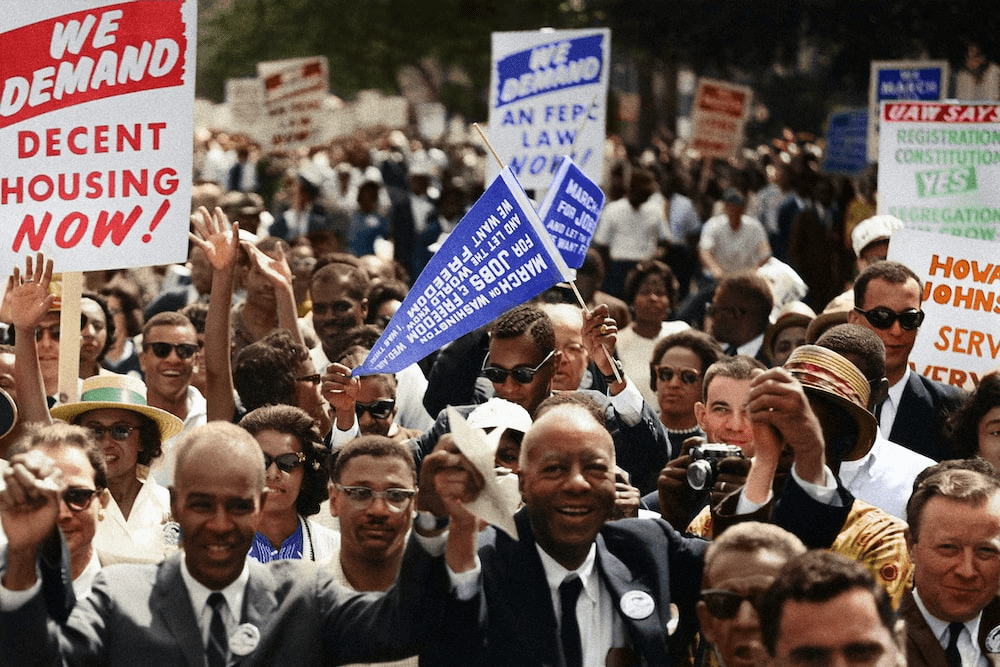
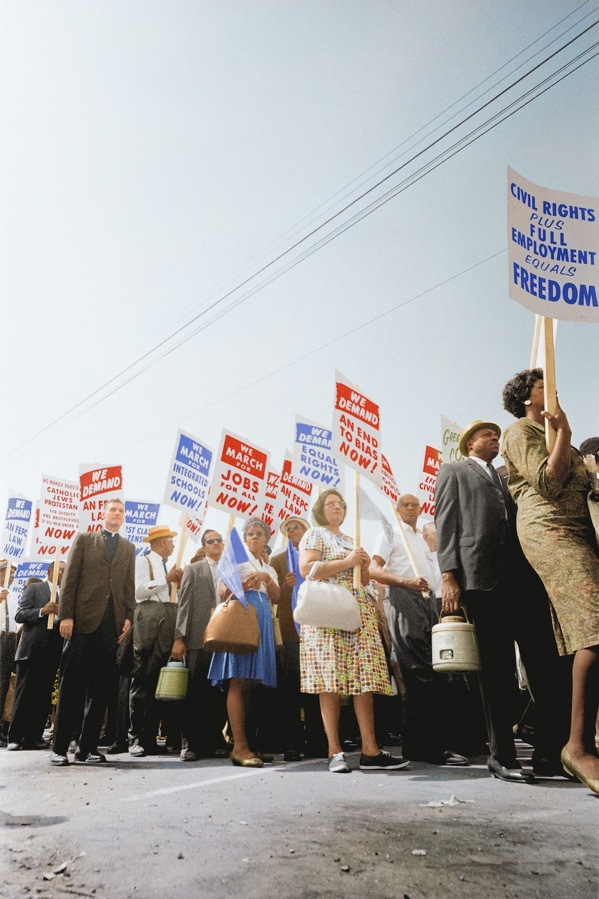
    The 1963 Freedom March and the “I Have a Dream” speech that Martin Luther King Jr. made during that march would perhaps not have been as impactful as it was then or as memorable as it is today if it weren’t televised and recorded. Human memory is fleeting, but the camera remembers every detail of that speech.

    The Aftermath of the JFK Assassination

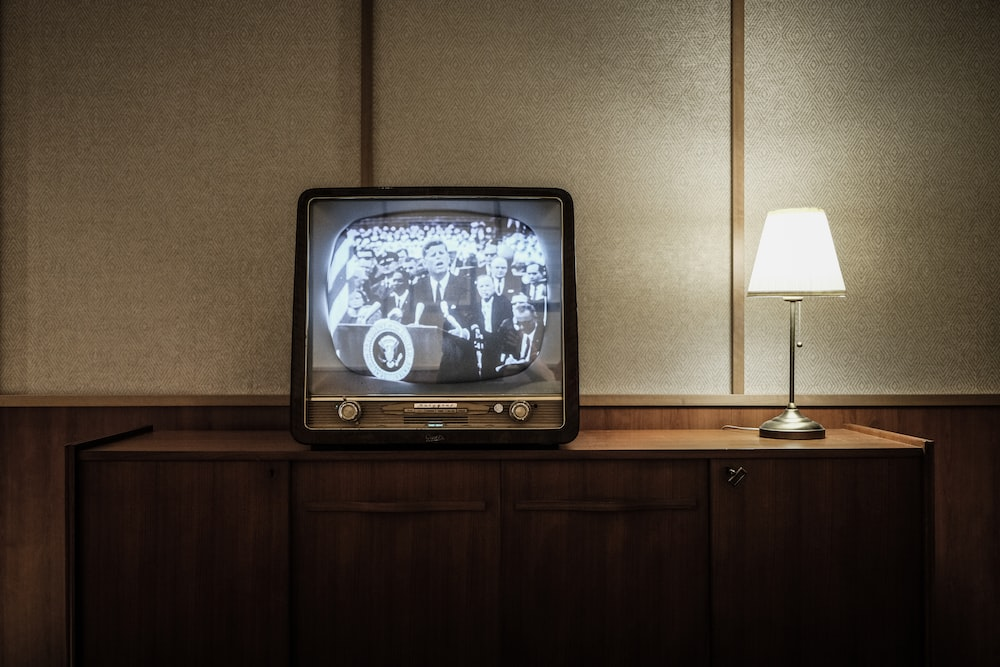
    The reportage following the assassination of John F. Kennedy was some of the most extensive in the history of national television.

    News reporters swarmed Dallas to immortalize the hasty oath-taking ceremony of Vice President Lyndon B. Johnson. They could record the former First Lady in the same blood-stained clothes she wore during the deadly motorcade.

    That said, we’re sure the news media didn’t expect to capture another assassination and that too so soon after the death of a US President.

    oath taking ceremony

    “Report from Vietnam”

    Everyone knows the Tet Offensive was the event that reinforced the US withdrawal from the Vietnam War, but they may not know about the report that took the wind out of their sails.

    Report from Vietnam” was a report by Walter Cronkite, the anchor of CBS Evening News, documenting a two-week trip to Vietnam after the Tet Offensive. The situation on the ground this soon after the devastating attacks may have cemented President Johnson’s announcement not to run for reelection.

    Lee Harvey Oswald is Assassinated

    The Guinness World Record for the “First Murder on Television” goes to Lee Harvey Oswald. Two days after the assassination of John F. Kennedy, reporters clamored to get a glimpse of the alleged shooter.

    They should’ve been careful what they wished for because they traumatized more than half the households across the US by capturing one of the violent televised moments of the 1960s. They ended up showing Jack Ruby killing Lee Harvey Oswald as the police were escorting him.

    Visit Kennedys and King for Videos and Interviews

    Find the videos and interviews of some of the above televised moments on Kennedys and King. You can also check out other media, such as articles, reviews, and resources we have collected over the years, to bring the truth behind the political assassinations of the 1960s to light.

    Contact us for inquiries and to lend your support to our cause.

  • Never Forget: The 4 Most Notable Ways 1968 Made History

    Never Forget: The 4 Most Notable Ways 1968 Made History

    The ’60s were a turbulent decade. Every year was marked by a few triumphs in space technology and too many tragedies here on Earth. Of the ten years that marked the difficult decade, 1968 was the most eventful. Click here to get our hot take on these events more than 50 years later.

    Keep reading for a quick rundown of some of the unforgettable historical events of 1968.

    1. The Tet Offensive

    Late January was the “Tet”, or Lunar New Year for much of Southeast Asia. Around this time in 1968, North Vietnam launched its violent Tet Offensive against the US and South Vietnam; it may have also marked the beginning of the end of the US involvement in the Vietnam War.

    The two sides normally didn’t engage in battle on “Tet”. The day was an unspoken truce between the North and South. That day, the North launched an attack on 36 major cities and towns with an army of 85,000 Viet Cong.

    While the invasion failed to make its intended impact, it led to widespread discussion against US involvement and kickstarted its eventual retreat from the Vietnam War.

    Vietnam War scenes


    2. RFK Announces Candidacy

    On March 16, 1968, Senator Robert F. Kennedy announced that he would be running for the role of the President of the United States, a rather late but welcome announcement for his supporters and the Democratic Party.

    RFK’s main competitor in the race was the then Vice President Hubert Humphrey, but that seems a minor detail in the face of the fact that the campaign lasted only 82 days, ending in the Senator’s assassination.

    3. The MLK Assassination

    The Assassination of Martin Luther King was a historical event that shook America. It occurred on the evening of April 4, 1968, and sparked riots across the country that resulted in 40 deaths and caused property damage in more than 100 cities.

    While an arrest was eventually made in the case, later investigations prove any charges and convictions to be nothing more than a coverup operation to hide the real killers.

    4. The RFK Assassination

    Senator Robert F. Kennedy was assassinated on June 6, 1968. His demise, like his forebearers’, would become an unsolved case. It would contain conflicting reports on how many gunshots were fired, its conclusions deviating from the proposed angles of the attack (at close range, from behind and from extreme top angles).

    You can find more about these inaccuracies in Mel Ayton’s The Kennedy Assassinations: A Review. This well-written article will make you think twice about every detail of the RFK and JFK assassinations. Support our organization, so we can keep using our words to advocate for the truth behind the political assassinations of the 1960s.

    Reach out for questions and concerns.

  • The Interesting History Behind Jackie Kennedy’s Infamous Pink Suit

    The Interesting History Behind Jackie Kennedy’s Infamous Pink Suit

    The assassination of John F. Kennedy has been prodded at, picked apart, dissembled, and reassembled. It has been analyzed down the last stitches of clothing worn by the occupants of that ill-fated motorcade. Find everything that has been disclosed thus far here.

    Today, we bring you the fascinating story behind the pink suit that Jackie Kennedy wore on that Friday, November 22nd, 1963.

    The Pink Chanel Suit

    In the ’60s, the first ladies followed a tradition established in the 1800s. When 23rd first lady Caroline Lavinia Scott Harrison bolstered the America first policy by revealing her dress was made locally, she made it an unspoken rule for her contemporaries.

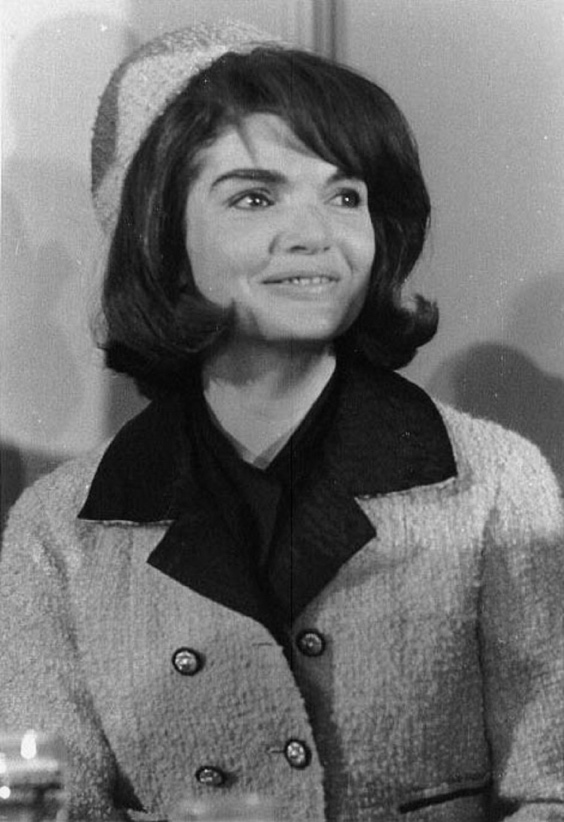
    Due to this tradition, the 35th first lady wore a pink suit from Coco Chanel’s 1961 Fall/Winter line-up on what would turn out to be her husband’s final day. Her ensemble featured:

    • A pink bouclé coat with round gold buttons and a navy-blue lapel
    • A matching pink bouclé skirt
    • A similar pillbox hat
    • White gloves
    • A few pearl necklaces

    Lady Bird Recounts the Assassination

    When President Kennedy was assassinated, Jackie was sitting beside him. Meanwhile, Vice President Lyndon B. Johnson occupied a different vehicle with his wife, Lady Bird Johnson. The latter reported that, as soon as the first shots were fired, she saw “a bundle of pink” in the car’s backseat, which she believes was Jackie covering her husband’s body.

    From Pink Suit to Bloody Symbol

    As Vice President Lyndon B. Johnson took over as the 36th US President, Jackie Kennedy was featured on national television boarding Air Force One wearing the same pink suit, now stained with her husband’s blood—she did this on purpose.

    After arriving at the hospital, she refused to take off the skirt-suit so that her husband’s killers and everyone else could “see what they’ve done.” It reportedly stayed on her person until the morning after.

    Jackie Kennedy Lyndon Johnson

    The Suit’s Whereabouts

    Those who didn’t see Jackie Kennedy in the flesh that day didn’t know the exact shade of the pink suit until November 29th, 1963, when Life Magazine published colorized images in a memorial issue.

    We may never know the whereabouts of the pillbox hat and white gloves, but the forever-stained skirt-suit, stockings, shoes, and handbag that Jackie wore that day were preserved in the National Archives in the 1960s. They likely won’t see the light of day until 2103 due to a deed of gift condition by Jackie’s daughter Caroline.

    Support Kennedys and King to Uncover the Truth Behind the JFK Assassination

    We never get to see Jackie Kennedy’s suit for as long as we live, but let’s not let that be the case with the assassination of John F. Kennedy. Use your platform to advocate for the truth behind one of America’s most high-profile unsolved cases.

    Browse our website for articles, documents, reviews, and other resources regarding the political assassinations of the 1960s, and feel free to share your multimedia here.

  • 4 Things that Make Bobby Kennedy an Inspiration

    4 Things that Make Bobby Kennedy an Inspiration

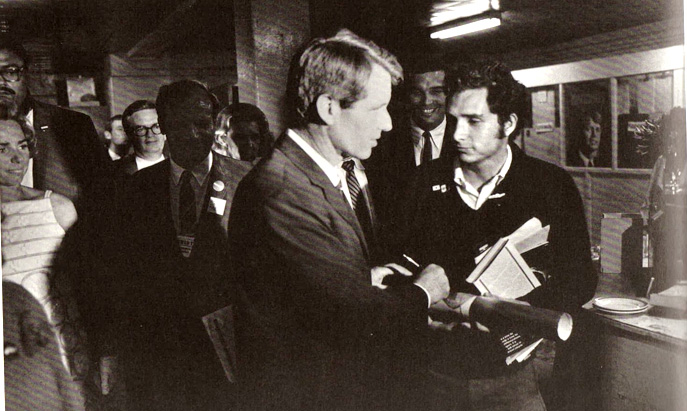
    Robert F. Kennedy, also known as Bobby or RFK, assumed the position of US Attorney General from 1961 to 1964. In 1965, he became a US Senator, a position he held until his assassination in 1968. Click here for James DiEugenio’s take on the incident.

    Let’s set aside the mystery surrounding his death for two minutes and celebrate this American icon’s inspiring yet sadly short life.

    1. The Ambition to Succeed

    RFK’s ambition to succeed is perhaps best described in his own words. While describing himself as the “seventh of nine children,” he revealed that he had to struggle to survive that far down the order.

    We wouldn’t say he just survived. We appreciate the pressure a young Bobby would’ve felt. Where most would’ve resigned themselves to the role of black sheep, Kennedy continued to fight his way to the top and was eventually successful in his political ambitions.

    2. The Unwillingness to Compromise

    Bobby’s fight to the top wasn’t smooth-sailing. He probably had to choose between his morals and ambitions multiple times. Let us recount one incident we know of when RFK eschewed his ambitions for something that went against his principles.

    One could say Wisconsin Senator Joseph McCarthy capitalized on the Cold War hysteria swirling to abuse his privilege to the extent that wouldn’t go unpunished today. As chairman of the Permanent Subcommittee on Investigations (PSI), McCarthy took Robert, a budding lawyer at the time, under his wing.

    Despite the pressure to prove himself, Kennedy left McCarthy’s side because he disagreed with his “ways” of gaining intelligence from suspected and self-proclaimed communists.

    RFK bridge

    3. The Struggle to Reduce the Wage Gap

    RFK was deeply disturbed and shocked by the living conditions during his visits to urban slums throughout the US. He attempted to draw attention to their plight. He used his position to influence lawmakers to bridge the wage and job opportunity gap, something civil rights activist Martin Luther King had advocated for during the final years of his life.

    Like MLK, RFK focused on self-reliance, so he launched Bedford-Stuyvesant, a project geared towards restoring businesses and creating job opportunities within impoverished communities.

    4. The Fight Against Organized Crime

    Robert Kennedy created a precedent as the 64th US Attorney General by directly prosecuting and exposing organized crime at its peak.

    He almost single-handedly took down organized crime, which had an iron grip on businesses, unions, gambling establishments, and politics, probably inspiring his contemporaries to do the same.

    Visit Kennedys and King to Explore Possible Motives Behind the RFK Assassination

    Look up “RFK assassination” on our search portal to find all the latest updates regarding the assassination of Robert F. Kennedy, including Sirhan Sirhan Parole Application and RFK Junior’s claim that Sirhan Sirhan was not his father’s killer and should, therefore, be set free.

    Get in touch with us to share your thoughts about the RFK assassination.

  • A Closer Look at Bob Dylan’s JFK Song

    A Closer Look at Bob Dylan’s JFK Song

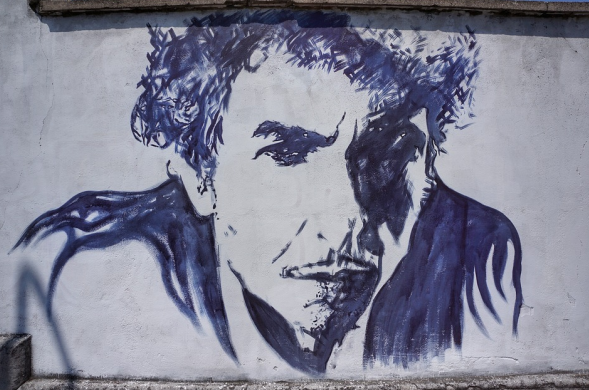
    Bob Dylan was a well-established artist before the 2020 release of “Murder Most Foul.” Click here to listen. The 17-minute song would be Dylan’s longest and boldest work yet. The song reiterates what we’ve been trying to say: President John F. Kennedy was the target of a wide-scale conspiracy—a possible coup d’état.

    It’s high time we took another look at this song to decipher its already clear meaning.

    A Shakespearian Tragedy

    If the title of this song sounds familiar, it’s because it was first introduced by the man who had the ultimate way with words: Shakespeare. The words “murder most foul” were first used in Hamlet, particularly by the dead king’s ghost, when telling Hamlet, his son and heir, about his killer.

    The original phrase alludes to a conspiracy that had gone largely ignored and unquestioned, as pointed out by the ghost. This explains why Dylan used it to allude to a different, more contemporary conspiracy: the assassination of John F. Kennedy, which has also been disregarded and forgotten with every passing generation.

    The Use of “Boys”

    Read the lyrics that come before and after, “Say wait a minute, boys, do you know who I am?” and you’ll realize that Dylan was criticizing the Warren Commission’s “magic bullet” theory about a single bullet hitting more than one occupant in the vehicle, the President and the Governor of Texas.

    Such a feat is nearly impossible for a single killer, and Dylan seems to agree. If he weren’t, he would use “boy” instead of “boys” when describing President Kennedy confronting his killers.

    Bob Dylan mural

    “The Timing Was Right” Indeed

    Right after the above lyric comes another lyric that shouldn’t come as a surprise to anyone who has followed our updates since we were CTKA (Citizens for Truth about the Kennedy Assassination). It says, “Was a matter of timing and the timing was right.”

    The timing here refers to the events that happened right before Kennedy was brutally taken down. After his death, word spread that the assassination might have been an inside job. The President wasn’t on the best terms with the CIA after they butted heads on the Bay of Pigs invasion, and it was rumored that he fully intended to pull US troops from Vietnam.

    These speculations go beyond conspiracy theories because there’s plenty of evidence backing them up. Find it on the Kennedys and King website to learn the truth behind the JFK assassination. Don’t forget to check out this review on the outrageous New York Times interview following Dylan’s song, a work of art that, in our opinion, beautifully summarizes the most infamous political assassination from the 1960s.

    Extend your search to other political murders around the same time, especially the malcolm x assassination, Martin Luther King, and Robert F. Kennedy. The latter was also killed by a so-called “lone assassin” five years later.

    Feel free to contact us to share your thoughts and concerns.