Category: Blogs

  • Revealing the Minute Details of the MLK Assassination

    Revealing the Minute Details of the MLK Assassination

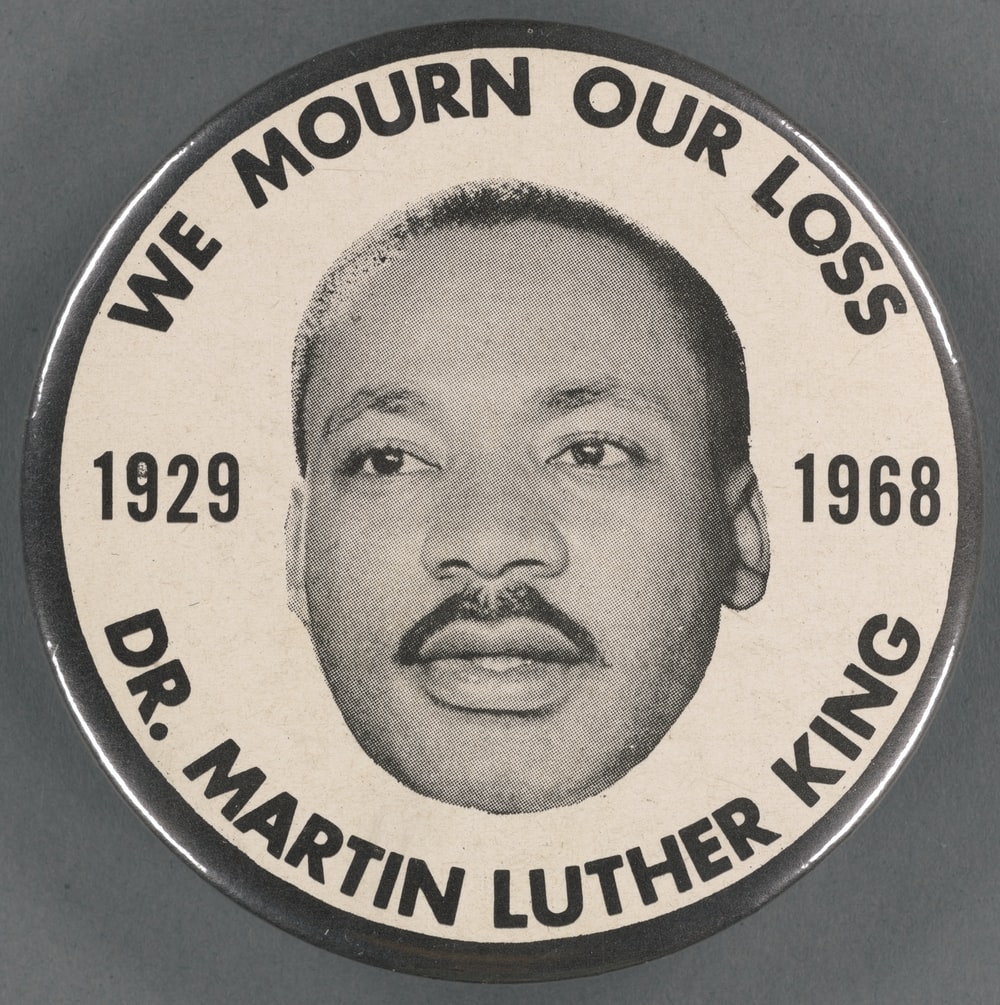
    This year marks the 54 years since Martin Luther King Jr. traveled to Tennessee to support 1,300 sanitation workers in their quest for equal rights. It wasn’t his first stop, but that fateful evening on April 4, 1968, at exactly 6:05 p.m., it would prove to be his last.

    Today, Kennedys and King take you further into the events of the day of this brave leader’s assassination.

    A Death Prompted by Death

    MLK’s death wasn’t directly prompted by death; it was more of a butterfly effect—a melting pot that had gone unwatched for quite a while. Let us explain.

    • February 1, 1968: A garbage truck malfunctions, killing two sanitation workers.
    • February 12, 1968: After several attempts at negotiating better working conditions for Black sanitation workers, a strike is announced, picket lines are erected, and signs are held to protest poor working conditions for Tennessee’s sanitation workers.
    • April 3, 1968: King and his aides arrive in Memphis to support the protest.
    • April 4, 1968: King falls after someone fires a single shot from a high-powered rifle.

    MLK quote

    The Reason Behind Staying at the Lorraine Motel

    When MLK checked into Room 306 at the Lorraine Motel on April 3, 1968, he had no idea it would become a crime scene the next day. His reasons for staying at the motel were simple: it was one of those rare places that hosted African American guests.

    A few hours after checking into the motel, King gave his last public speech at Mason Temple Church. Famously titled “I’ve Been to the Mountaintop,” a slightly under-the-weather MLK would end up talking about his mortality, entirely unaware of his impending demise.

    The Details of the Martin Luther King Jr. Assassination

    We all know that MLK was standing on the balcony of his room when he was shot. But why was he there? There are more what-ifs in his assassination than any other political assassinations of the 1960s:

    • What if MLK hadn’t been invited to have dinner with Reverend Samuel Billy Kyles at his home?
    • What if he hadn’t emerged on the balcony of his room?
    • What if Andrew Young hadn’t asked him to get his coat?
    • What if the fatal shot had landed on his shoulder instead of his face?

    The activist and leader died an hour after a single rifle shot shattered his jaw and spinal column and severed his spinal cord.

    Discover the Aftermath on Kennedys and King

    Do you want to know what happened after the assassination of Martin Luther King Jr.? Explore the manhunt that followed his demise and the documents revealed since the events of that fateful day in April 1968 on Kennedys and King.

    Read our articles, blogs, and archives to learn the truth behind the political murders of the 1960s, particularly those of Malcolm X, Robert F. Kennedy, John F. Kennedy, and Martin Luther King Jr.

    Reach out to know how you can contribute to our cause.
     

  • The Events that Shook America After Martin Luther King Jr.’s Death

    The Events that Shook America After Martin Luther King Jr.’s Death

    Dr. Martin Luther King Jr. succumbed to his injuries on April 4, 1968, an hour after James Earl Ray, a con artist who was supposed to be serving a 20-year sentence, shot him in the face.

    In today’s blog, Kennedys and King brings you some notable events that made up the aftermath of the martin luther king assassination.

    Major Riots Follow Regardless

    When CBS Evening News reported King’s death, the host added Walter Cronkite added a message a request by America’s president at the time, Lyndon B. Johnson. It was a message to heed King’s message of non-violence, peace, and harmony legacy.

    However, these words appeared to fall on deaf ears because the news report was followed by riots in at least 100 cities across the US, particularly in Black neighborhoods. They were so intense in Baltimore and Chicago that the National Guard and Marines had to intervene.

    riots

    Coretta Scott King Leads a Silent March

    Only four days after the assassination of Martin Luther King Jr., his wife Coretta Scott King flew to Memphis on a plane arranged by Robert F. Kennedy. Her motive for going to Memphis wasn’t to start a protest or say something to incite violence but to continue her husband’s legacy and mission.

    She organized a march for the country’s African American sanitation workers, which a crowd of 40,000 people moving through the streets eerily silent in their vigil attended.

    Lester Maddox Refuses to Mourn

    The news of MLK’s death brought mixed reactions. Had people been unified in their outrage and anger at such a senseless murder, the riots would’ve encompassed more than 100 cities.

    On the one hand, the African American community was almost united in its confusion, grief, and anger at what may have been a hate crime. The white majority was mixed in its reaction; some grieved the loss of the Civil Rights leader, some remained silent, and a small number in the South were critical and outright rebellious.

    Lester Maddox belonged to the latter category. The Governor of Georgia refused to participate in the National Day of Mourning and threatened to raise the flag outside the statehouse to full mast.

    James Earl Ray Flees to No Avail

    James Earl Ray was a prison escapee, a fugitive of the law when he killed MLK. His crime led to a two-month-long chase across five countries and cost more money than the conman was worth.

    The authorities caught up with the assassin in London and brought him back to the US, where his fate was sealed with a 99-year sentence.

    MLK’s death was one of the cogs in a wheel that forced the United States to change history. Learn more about this assassination and the other political assassinations of the 1960s at Kennedys and King. Contribute facts about James Earl Ray, Lee Harvey Oswald, causes of the Civil Rights Movement, and other people and events related to the political murders in the ’60s.

    Get in touch for further assistance.

  • The Tumultuous Life of An Alleged Killer: James Earl Ray

    The Tumultuous Life of An Alleged Killer: James Earl Ray

    At a glance, James Earl Ray ticks all the boxes of someone who killed a leader of the Civil Rights Movement. He frequently committed petty crimes, supported George Wallace, and wanted to move to Rhodesia (present-day Zimbabwe) to join its strong white community.

    While doubts surrounding his ultimate crime persist, Kennedys and King will look at Ray’s life before and after he was locked away for good.

    The Fugitive, Twice Over

    You may know about Ray’s 1977 escape attempt, but were you aware that he’d tried the same thing a little more than a decade ago? At the time of Martin Luther King’s assassination, Ray had been an escaped convict for almost a year.

    On April 23, 1967, Ray hopped aboard a bread truck, escaped Missouri State Penitentiary, and fled to Canada. He would’ve probably stayed that way had he not been arrested for killing Martin Luther King on April 4, 1968.

    His Criminal Record

    Shortly before his arrest, James Earl Ray made it on the FBI’s Most Wanted list. The wanted poster included his latest picture, the relevant crime, and a two-liner with his criminal record, which included:

    • Burglary
    • Armed robbery
    • Counterfeit money orders.
    • Driving an automobile without the owner’s permission.

    Whether or not you believed he killed a person, his mile-long rap sheet remains an undisputed fact.

    MLK memorial

    A Marriage (and Divorce) in Prison

    On October 13, 1978, long after his arrest, James Earl Ray tied the knot with an artist Anna Sailing Sandhu. They shared an age gap of almost 20 years, but sparks must’ve flown after they met for a TV interview where Sandhu was invited to draw Ray.

    After spending 12 anniversaries exchanging letters, Ray officiated a marriage that started with separation by filing for divorce due to irreconcilable differences.

    Gaining the King Family’s Support

    Where the MLK assassination is concerning, there are three groups of people: the first believe Ray did it, the second thinks he didn’t act alone, and the third is convinced he’s innocent.

    The second group had enough support to prompt the Senate Congressional Hearing Committee to open an investigation into possible government collusion. They found the FBI’s campaign against MLK to be an indirect contributor, didn’t find any evidence of direct involvement, and concluded that Ray was the killer.

    The third group doesn’t have many supporters, but it includes King’s family, particularly his son, Dexter Scott King, who even went to Ray’s death bed to tell him that his family believed he was innocent.

    Learn more facts about James Earl Ray on our platform, which is dedicated to unearthing the truth behind the unresolved political assassinations of the 1960s. Please support our campaign for full transparency and accountability for the assassination of Martin Luther King Jr., among other activists and political figures murdered during this tumultuous decade.

    Visit our website to express your support today.

  • How the JFK Assassination Changed Secret Service

    How the JFK Assassination Changed Secret Service

    Shortly after the assassination of John F. Kennedy, the Secret Service, the agency responsible for the President’s security detail, among other things, went through a complete overhaul.

    As you’ll see in today’s Kennedys and King blog, prohibiting open-top limos was only the beginning of the changes we’ll see in the years following the assassination and the ensuing investigation.

    More Agents and a Higher Budget

    As indicated in a Washington Post article, the Secret Service only had 300 agents and a $5 million budget at the time of the assassination. Their duties were mostly relegated to criminal investigations; the protective missions were added later and were not as clearly defined.

    In any case, the Secret Service inducted a slew of agents after the assassination. Today, more than 3,000 agents are working for the organization, primarily protecting the President and other entities in the Senate and House of Representatives, under a minimum budget of $30 billion.

    Creation of a Security Network

    After the assassination, the Secret Service came under fire for its poor communication skills. The Warren Commission, a deeply flawed albeit partially credible investigation into the assassination, found that the agency hardly collaborated with local law enforcement, not seeing fit to disseminate intelligence before an event.

    Today, you’ll see these secret agents not only set up layers of security through electronic and physical barricades but also partner with local law enforcement to remain attuned to any security threats in the area.

    Biden motorcade

    The Powers Granted by the Congress

    After President McKinley was assassinated in 1901, Congress assigned presidential security to the Secret Service. After President Kennedy was assassinated in late 1963, they were the ones that enacted a slew of statutes, the first of which was granting security to the deceased President’s wife and children. 

    As of the ’90s, Congress was still enacting new statutes, bringing the total to 23, all granting more power to the Secret Service and helping them counter newer threats of the digital age.

    The Counter Sniper Team

    In 1971, the Special Operations Division introduced the Counter Sniper Team, which included precision sharpshooters specializing in identifying and neutralizing long-range threats, the sort that killed President Kennedy.

    Before this, the unit only had the Counter Assault Team, which dealt with physical attacks in the vicinity. They weren’t trained or knew to scan windows and other nearby structures for potential suspects.

    Revisit the JFK Assassination at Kennedys and King

    Now that you know about the changes the Secret Service underwent after the JFK assassination visit our archives to know the gravity of the event that sparked such an upheaval. Explore the four major facts behind political murders in sixtees on our platform, including John F. Kennedy, Robert F. Kennedy, Martin Luther King Jr., and Malcolm X.

    Let us know if you have something to contribute regarding the facts behind political murders in sixtees.

  • The Most Famous Myths About the Civil Rights Movement—Debunked!

    The Most Famous Myths About the Civil Rights Movement—Debunked!

    They might say the past stays in the past because its gray areas take a backseat to a simpler perspective that history books endorse. The Civil Rights Movement was anything but a simple attempt at ending racial discrimination and earning equal rights. 

    Kennedys and King is devoting today’s blog to debunking some of the mistruths of these oversimplifications.

    Myth #1: Malcolm X was the Radical to Martin Luther King Jr.’s Pacifist

    No matter how far we might’ve come since the ’60s, we’ll continue to see activists as either radicals or pacifists. With all his harsh rhetoric, Malcolm X was seen as the former, whereas Martin Luther King Jr. was perceived as the latter. 

    It’s not quite this black-and-white. Malcolm X might have had his faults, but he never advocated for initiating violence. He supported defense, not violence, and that too when one’s wellbeing was at risk.

    On the other hand, MLK might be known for his peaceful rhetoric, but he too was in favor of taking arms to defend himself. He might’ve grown up among his people, but the things he was fighting for would’ve hardly won him any points with the white community, and he would’ve had to protect himself from their wrath.

    Overall, it would be better not to assign boxes labeled ‘pacifist’ and ‘radical’ to these two activists, who were more similar than you might think.

    march

    Myth #2: MLK Died a Hero

    MLK didn’t so much die a hero as he was made one in the months following his assassination. He might be a national hero with a holiday dedicated to his birthday today, but his public image was quite controversial during the three years leading up to his assassination.

    From advocating for the poor to assailing the US government’s involvement in Vietnam, it seemed as if he had finally started going against the American grain, against some of the issues uniting all Americans.

    Myth #3: The Black Panthers Were No Better than Armed Militia

    The Black Panther Party for Self Defense was founded in the ’60s primarily to fight police brutality. Their members are usually perceived as gun-wielding men with a penchant for paramilitary attire, which is true but only to a certain extent.

    They might be known as “cop killers” in white neighborhoods. However, in black neighborhoods, they were known for setting up health clinics, feeding over 10,000 children daily, and asking people to contribute and volunteer. By all accounts, they were doing the government’s work.

    Just as we don’t deny the shortcomings of Malcolm X and Martin Luther King Jr., we don’t deny the violent streak of certain Black Panther factions. However, that doesn’t change the fact that most of these leaders were assassinated during the Civil Rights Movement, which is no coincidence.

    Follow us as we make strides in our cause to bring these political assassinations of the 1960s to justice and advocate for more records to be undisclosed.

    Contact us if you know more facts behind political murders in sixtees.

  • 4 FAQs About the Press Coverage of the Kennedy Assassination

    4 FAQs About the Press Coverage of the Kennedy Assassination

    When President John F. Kennedy was assassinated, TV reportage wasn’t seen with the same respect as print media. They were akin to today’s paparazzi reporters but were the need of the hour as print would’ve taken a while.

    In today’s blog, Kennedys and King answers some of the most frequently asked questions about the press coverage of the Kennedy assassination.

    1. Were the Initial Reports Accurate?

    The initial reports of the incident came 10–15 minutes after the assassination. They were about as accurate as word of mouth. While TV cameras were allowed to roll round-the-clock, the reporters weren’t as lucky.

    Their eyes could only go so far, which in this case wasn’t far at all, as they were constantly bussed off to different locations and could hardly see or hear what had happened.

    If this happened in 2022 with the 1960s brand of press coverage, someone watching a live stream of the Kennedy cavalcade would know more about the assassination.

    2. Did a Narrative Form After the Fact?

    After the 24/7 coverage of the assassination, most television press was almost comical in how it formed a singular narrative and stuck to it for decades. In this case, most reporters ran with Dan Rather’s narrative. 

    Dan Rather’s only claim to the authenticity was that he was in Dallas when the assassination happened and was the first to report it live. Nevertheless, the American journalist’s account became primetime fodder on every anniversary. There were slight deviations, but the overall story was always the same across all channels.

    resting place

    3. Does that Mean the Press Didn’t Come Through?

    The answer to that is entirely subjective. We believe the general sentiment at the time wasn’t to make the reportage as sensationalistic as possible to garner views but to inform people who suddenly found themselves without a leader.

    That said, the press could’ve been more investigative from the get-go. Since they weren’t as thorough at the job as they should’ve been, we still have many gaps to fill until we can solve this mystery.

    4. How Does the Press Coverage of Lee Harvey Oswald Compare to that of President John F. Kennedy?

    Unlike the half-baked coverage of the John F. Kennedy assassination, the press was dogged in its coverage of Lee Harvey Oswald the day after his arrest, which was also the day Jack Ruby killed him at point-blank range.

    It remains unclear why the press had more access to the president’s killer and his subsequent assassination than the president himself, which is one of the many reasons this high-profile murder remains unsolved.

    While the Truth behind JFK assassination remains murky at best, we’ve compiled what we do know about the tragic event in one place. Help us advocate for more records to be undisclosed about the political assassinations of the 1960s, which included the assassinations of John F. Kennedy, Robert Kennedy, Martin Luther King Jr., and Malcolm X.

  • 4 Little-Known Facts About the Life of Malcolm X

    4 Little-Known Facts About the Life of Malcolm X

    You probably know Malcolm X as one of the leaders of the Civil Rights Movement— a much-discussed subject at Kennedys and King — and that he was assassinated in front of his wife and daughters on February 21, 1965. 

    But there’s so much the world has forgotten about the African American activist. Keep reading to find out.

    1. Malcolm X was Born Malcolm Little

    Malcolm X changed his last name ‘Little’ because it belonged to a slave ancestor. Since he didn’t know his original African name, he replaced it with an ‘X’. However, this isn’t where he stopped.

    After performing the Hajj in 1964, Malcolm changed his name again to El-Hajj Malik El-Shabazz.

    2. Malcolm X Had a Turbulent Childhood

    Growing up, we all have growing pains and rebellious phases. So did Malcolm, but in the context of an America led by white supremacists. Malcolm’s parents supported a black nationalist organization, the Universal Negro Improvement Association (UNIA).

    They supported equality and celebrated black pride and had to move from Nebraska to Wisconsin to evade the Ku Klux Klan threat. However, an offshoot of the organization, Black Legion, followed them to Milwaukee.

    The white supremacists set fire to the family’s house and made life as difficult for them as possible. When Malcolm’s father died two years later, there were murmurs that the Black Legion had killed him, although that’s circumstantial at best.

    After his mother was institutionalized, Malcolm and his siblings were separated and scattered across various homes, which is how they grew up.

    Civil Rights protest


    3.  Malcolm X Taught Racial Separatism (At First)

    Malcolm’s parents may not have had the chance to do much towards black pride, but Malcolm did. He traveled across city and state lines spreading his message through in-person sermons and radio broadcasts.

    On the surface, his message was the same as Martin Luther King’s. However, on closer inspection, you’ll find that he was skeptical of racial equality and advocated for racial separatism, which is the exact opposite of MLK’s message of love, peace, and harmony.

    4. Malcolm X Changed Tack After Traveling to Mecca

    The pilgrimage to Mecca apparently did Malcolm X a lot of good. It broadened his worldview and made him realize that the problem wasn’t with the white race but the culture and traditional backdrop of the enslavers and the enslaved.

    When he saw people performing Hajj regardless of skin color, he realized his role in the Civil Rights Movement wasn’t to separate black and white people or see the latter as the problem. It was to fight racism and its enablers and advocate for all black people, regardless of their religious affiliations.

    Help us uncover and document the mysterious political assassinations of the 1960s by contributing to our cause. Join Kennedys and King to reveal the redacted truth of the Kennedy, MLK, and malcolm x assassination, one disclosed document, tape, or newspaper clipping at a time.

    Get in touch for more information about how you can play a part in unveiling the facts behind political murders in the ’60s.

  • 5 Things You May Not Know About the Warren Commission

    5 Things You May Not Know About the Warren Commission

    The Warren Commission was set up to investigate the deaths of President John F. Kennedy and his alleged killer, Lee Harvey Oswald. Chaired by US Chief Justice Earl Warren, the Commission’s results experienced heavy criticism as soon as they became public.

    In today’s Kennedys and King blog, we’ll go over some details behind the details of its 888-page report.

    1. Earl Warren’s Personal Stake in the Investigation

    While committees have previously returned with more credible results, personal affairs notwithstanding, Earl Warren’s wasn’t one of them. The US Chief Justice was a close friend of the Kennedy family. His sentiments shouldn’t have impeded the investigation, but records show otherwise.

    From limiting access to Kennedy’s autopsy photos to barring the Commission from interviewing Jackie Kennedy, there’s no shortage of instances where he fell short of his duty, which might’ve affected the warren commission results.

    2. The Super-Secret Fidel Castro Interview

    The idea that Fidel Castro might’ve killed Kennedy is just that, an idea. However, it’s a conspiracy theory that the Commission thought fit to look into.

    During a three-hour off-the-record interview, which was so lowkey it wasn’t even revealed to key Warren Commission members, Castro denied the charges against him repeatedly, just like he did in public.

    Unfortunately, we’ll never see a transcript of this interview as no one took notes during the proceedings, and the people who knew are long gone.

    Fidel Castro

    3. The Gerald Ford Leaks

    Gerald Ford was one of the congressmen on the Warren Commission, but he was also an FBI informant. He constantly leaked information about their progress to the Bureau’s Director, J. Edgar Hoover.

    What’s more interesting is that this reveal wasn’t common knowledge until 2006, months after Ford’s death, when a cache of declassified documents suggested Ford as the one to approach the FBI with this information.

    4. The FBI-CIA Interference

    The FBI and CIA might’ve interfered with the investigation by telling lies and destroying evidence that could’ve changed the report drastically. Their transgressions included:

    • Not admitting to surveilling Oswald in the days leading up to the investigation.
    • Destroying a note left by Oswald threatening an FBI agent before the assassination.
    • Removing the FBI agent’s name from the address book transcript.
    • Lying about their activities in the days leading up to the assassination.

    5. The Motiveless Murder

    You’d think a president’s murder would have a rhyme and reason to it, but the Commission thought otherwise. While they recreated the event and proposed the assassin, they didn’t provide a plausible motive for the President’s assassination.

    The Warren Commission experienced collusion, breach of privacy, and conflict of interest, among other things. There were enough of them to alter the course of the investigation.

    Visit our website if you’re interested in the findings of the Warren Commission. Check out all the analyses on a report that concealed the truth behind the JFK assassination, learn important facts about Lee Harvey Oswald, and show your support through text and audio contributions.

    Get in touch for further assistance.